
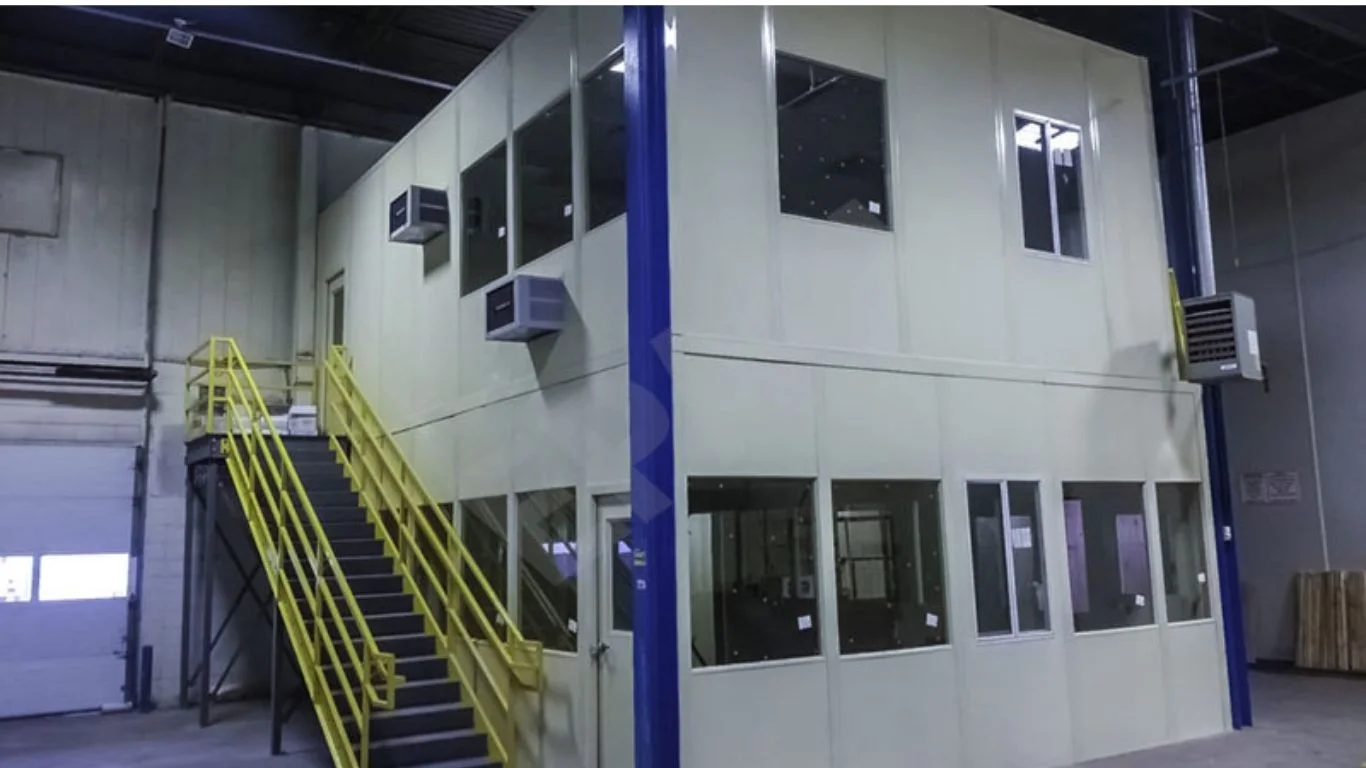
Noise is one of the most overlooked challenges in industrial and commercial environments. Factories, power plants, manufacturing units, and even busy commercial buildings deal with high decibel levels every day. Over time, this affects worker health, productivity, and regulatory compliance. Acoustic panels offer a practical, proven solution to this problem and understanding how they work can help you make better decisions for your next project.
What Are Acoustic Panels?
Acoustic panels are specially engineered panels designed to absorb, block, or dampen sound. They reduce noise transmission between spaces or contain it within a defined area. Unlike standard wall panels, these are built with sound absorbing core materials that break the path of sound waves before they travel further.
In industrial settings, acoustic enclosure panels are often used to wrap around loud equipment like generators, compressors, or heavy machinery. In commercial buildings, sound insulation panels help create quieter offices, conference rooms, or public spaces.
The result is a controlled acoustic environment – safer, more comfortable, and compliant with noise standards.
How Do Acoustic Panels Work?
Sound travels as a wave. When it hits a standard wall or panel, part of it reflects back and part of it passes through. Acoustic panels interrupt this process in two ways:
- Sound absorption – The panel’s core material converts sound energy into a small amount of heat, preventing it from bouncing around the space.
- Sound blocking – The panel’s density and mass stop sound from passing through to the other side.
The effectiveness of a panel depends on its core material, thickness, and surface treatment. Higher-quality materials with greater density deliver better noise reduction performance.
Common Core Materials Used in Acoustic Panels
The performance of any acoustic panel depends largely on its core material. The most widely used options include:
- Rockwool (Stone Wool) – Made from basalt rock, rockwool panels are dense and highly effective at absorbing sound. They also offer excellent fire resistance and thermal insulation, making them a preferred choice for industrial noise control solutions.
- Glass Wool – Lightweight and flexible, glass wool panels provide good acoustic performance at a lower weight. They work well in commercial buildings and spaces where wall loading is a concern.
- PUF (Polyurethane Foam) – PUF core panels offer a balance of thermal and acoustic insulation. They are commonly used in enclosures where both temperature control and noise reduction are required.
These materials are typically sandwiched between two steel face sheets, forming what is known as acoustic sandwich panels. This multi-layer design is what gives them their superior noise-blocking performance.
Where Are Acoustic Panels Used?
Noise reduction panels find application across a wide range of industries and project types:
- Factories and manufacturing units – To contain machine noise within specific zones and protect workers on the floor
- Power and energy plants – Generator enclosures, compressor rooms, and turbine housing
- Commercial buildings – Office partitions, conference rooms, and lobbies where noise privacy matters
- Healthcare and education facilities – Hospitals and schools where a quiet environment supports better outcomes
- Metro stations and transport hubs – High-traffic areas where sound management improves the passenger experience
- Data centers and telecom facilities – Equipment enclosures where both thermal and acoustic control are essential
In all these cases, factory noise control panels serve a dual purpose: they protect people and they keep operations running efficiently.
Key Benefits of Using Acoustic Panels
Choosing the right soundproofing panels for your facility delivers measurable advantages:
- Improved worker safety and health – Prolonged noise exposure can lead to hearing loss and stress-related illness. Proper noise control reduces these risks significantly.
- Regulatory compliance – Most industrial and commercial sites must meet workplace noise standards. Acoustic enclosure panels help facilities stay within permissible limits.
- Better productivity – Quieter environments support concentration, communication, and overall work quality.
- Thermal insulation – Many acoustic sandwich panels also provide thermal performance, reducing energy consumption.
- Modular and customisable – Panels can be designed to fit specific equipment, room dimensions or project requirements.
EPACK Prefab’s Approach to Acoustic Panel Solutions
EPACK Prefab, with over 25 years of experience in prefabricated and pre-engineered construction, manufactures high-performance acoustic panels for industrial and commercial applications across India. Using advanced core materials like Rockwool, Glass Wool, and PUF, EPACK designs acoustic panels for buildings and equipment enclosures that meet stringent noise and safety standards.
Every solution is factory-manufactured, which ensures consistent quality and faster installation on-site. Whether you need a full acoustic enclosure for heavy industrial equipment or soundproofing panels for a commercial project, EPACK offers end-to-end support, from design to delivery.
Conclusion
Managing noise is no longer optional in modern construction and industrial operations. Acoustic panels provide a reliable, cost-effective way to reduce sound, protect workers, and meet compliance requirements. With the right material choice and panel design, both new projects and retrofits can achieve significant noise reduction.
If your project requires industrial noise control solutions or customised acoustic panels, reach out to EPACK Prefab to explore the right solution for your space.
🌐 Website: www.epack.in
✉️ Email: enquiry@epack.in
📞 Phone: +91 81304 44466