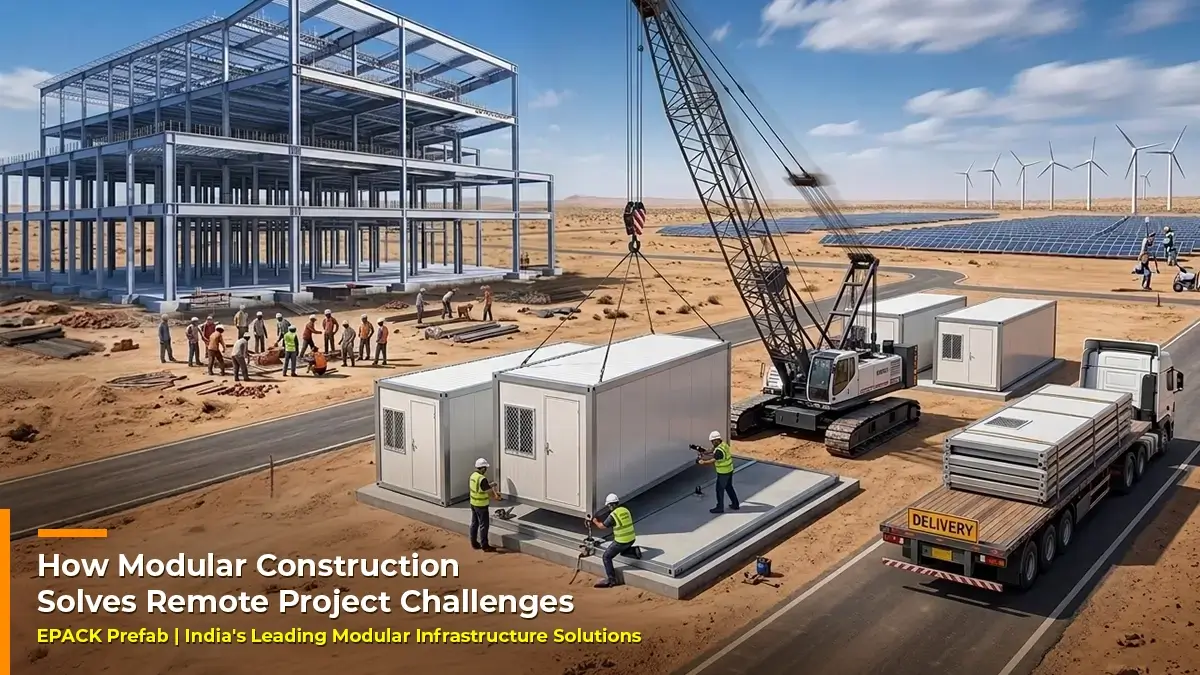
India’s industrial infrastructure is rapidly moving beyond its traditional urban and semi-urban boundaries. Renewable energy parks, mining operations, highway corridors, oil and gas installations, and rural cold chain facilities are being built in locations that conventional construction methods were never designed to serve efficiently.
Remote project sites present a unique convergence of challenges — scarce skilled labour, limited access roads, extreme weather conditions, and tight execution timelines that cannot accommodate the slow pace of conventional brick-and-mortar construction. For industrial developers and project owners operating in these environments, modular construction has become not just a practical alternative, but the default infrastructure solution.
At EPACK Prefab — India’s leading manufacturer of Pre-Engineered Buildings and prefabricated solutions with 25+ years of experience and over 7,400 projects delivered — we have seen first-hand how modular construction transforms remote project execution. This article examines the specific challenges of remote sites and explains precisely how modular systems solve each one.
The Remote Project Challenge in 2026
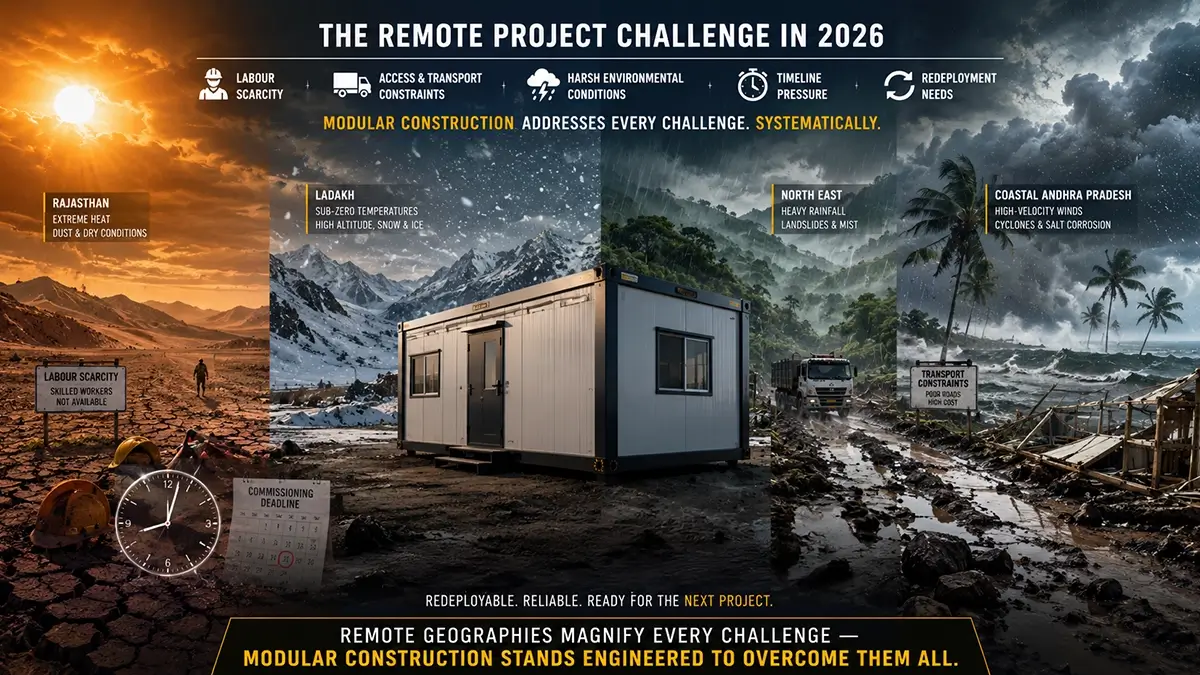
As India’s PLI schemes, renewable energy targets, and national infrastructure programmes push development into Tier 3 regions and beyond, project execution teams are encountering a consistent set of logistical and operational obstacles:
- Labour scarcity: Skilled construction workers are concentrated in urban areas and are unwilling or unavailable to relocate to remote sites for extended periods.
- Access and transportation constraints: Many remote sites have limited or seasonal road access, making repeated supply runs for materials expensive and unpredictable.
- Harsh environmental conditions: Sites in Rajasthan, Ladakh, the Northeast, and coastal Andhra Pradesh face extreme heat, cold, seismic activity, and high-velocity winds that standard temporary structures cannot withstand.
- Timeline pressure: Projects in renewable energy, mining, and infrastructure sectors operate under strict commissioning deadlines — every week of construction delay has measurable financial consequences.
- Redeployment needs: Companies managing multiple remote projects simultaneously need infrastructure that can move with the project portfolio, not be abandoned at each site closure.
Modular construction addresses every one of these challenges systematically.
What is Modular Construction?
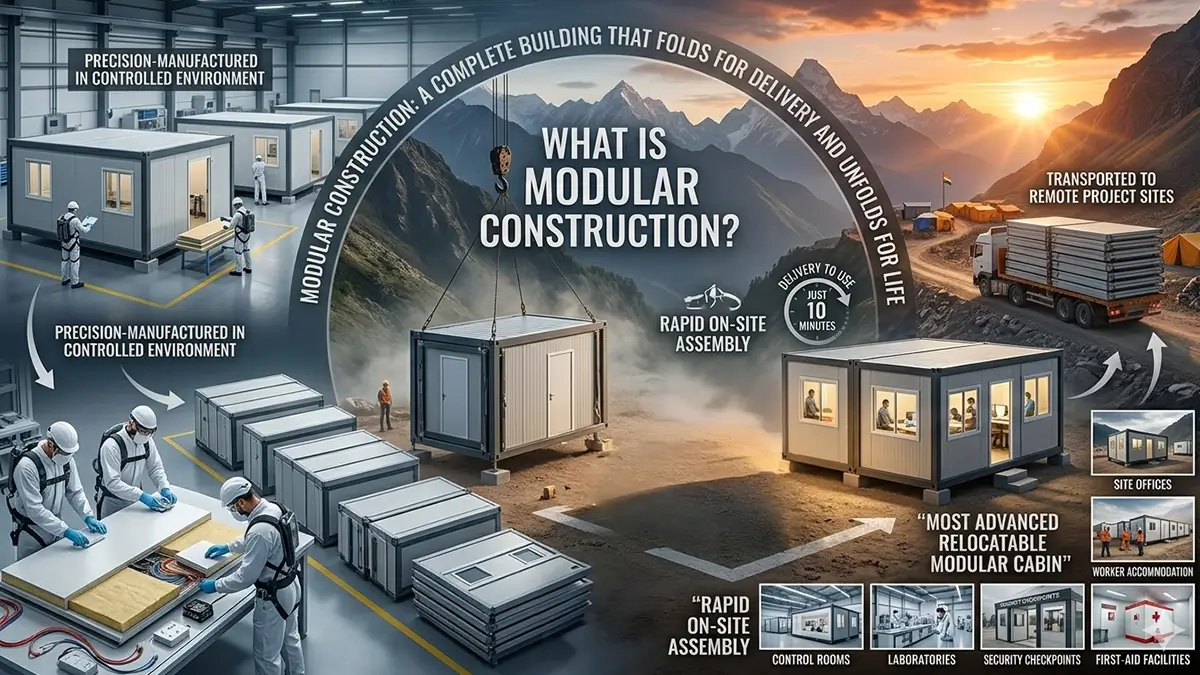
Modular construction is a method in which building components — rooms, offices, accommodation units, or entire structural bays — are precision-manufactured in a factory-controlled environment and then transported to the project site for rapid assembly. The majority of fabrication, quality control, and finishing work happens off-site, in controlled conditions, before a single component reaches the project location.
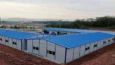
For remote project applications, the most important product category is relocatable modular cabins — self-contained, fully functional units that serve as site offices, worker accommodation, control rooms, laboratories, security checkpoints, or first-aid facilities. EPACK Prefab’s Z-Type Modular Cabin represents the most advanced version of this concept available in India today.
EPACK Z-Type Modular Cabin: A complete building that folds for delivery and unfolds for life — operational from delivery to use in just 10 minutes.
How Modular Construction Solves Remote Project Challenges
1. Reduced On-Site Labour Dependency
Finding skilled labour in remote areas is one of the most persistent challenges of infrastructure execution. Modular construction fundamentally restructures the labour equation: the complex, skill-intensive work of fabrication, welding, panel installation, electrical fitting, and finishing is completed at the factory by a trained and stable workforce. What arrives at the remote site is a ready-to-assemble system requiring minimal on-site skill.
EPACK’s Z-Type Modular Cabin requires only three workers and a crane for installation — a far cry from the teams of masons, carpenters, plumbers, and electricians needed for an equivalent permanent structure. This dramatically simplifies remote site management and eliminates dependency on local labour availability.
2. Faster Project Execution
Remote projects in renewable energy, mining, and highway construction operate under rigid commissioning schedules. Modular construction introduces parallel execution: while foundations and site preparation are underway, the modular units are being fabricated at the factory simultaneously — compressing the critical path significantly.
The EPACK Z-Type Modular Cabin moves from delivery to operational status in just 10 minutes, using a simple 3-step process: Lift (crane lowers unit to four corner points), Unfold (gravity-assisted hinged walls open into position), and Secure (workers fasten key bolts to complete the rigid structure).
3. Optimised Transportation and Installation
One of the most underestimated challenges of remote project infrastructure is the cost and complexity of getting materials to site. EPACK’s Z-Type Modular Cabin addresses this with an engineering innovation at its core: the folding mechanism collapses the cabin to just 510mm in height for transport, allowing a single standard truck to carry 8 complete cabin units. Eight cabins per truck means fewer vehicle movements, lower fuel cost, less road wear, and dramatically reduced logistics complexity.
Compact Design: Transport size L5,900 × W2,400 × H510mm | Deployed size L5,900 × W2,400 × H2,470mm | 8 units per single truck
4. Durability in Harsh Remote Environments
EPACK’s modular cabins are engineered to perform where conventional alternatives fail. The Z-Type Modular Cabin is rated for Grade 11 wind resistance (120 km/h), Grade 8 seismic resilience, and operates across a temperature range of -25°C to +50°C — covering the full spectrum of climatic conditions found across India’s diverse geography.
Wall panels use PUR/PIR sandwich panel technology with 50mm insulation thickness (customisable), delivering superior thermal performance in both desert heat and high-altitude cold. With a designed service lifespan of 15–20 years, these cabins are long-term infrastructure assets — not temporary solutions.
| Wind Resistance | Seismic Resilience | Temperature Range | Service Lifespan |
|---|---|---|---|
| 120 km/h Grade 11 | Grade 8 Seismically rated | -25°C to 50°C All Indian climates | 15–20 Years Reusable asset |
5. Reusability Across Multiple Projects
For companies managing sequential remote projects — a renewable energy developer moving from one wind farm to the next, or a mining company opening new excavation zones — modular infrastructure has a compelling financial advantage: it moves with you. An EPACK modular cabin that serves as a site office on Project A can be dismantled, transported, and redeployed on Project B in a matter of hours. The same unit can cycle through 3–4 project sites across its 15–20 year lifespan, delivering a return on investment that no permanent structure can match.
Industries Benefiting from Modular Construction in Remote Areas
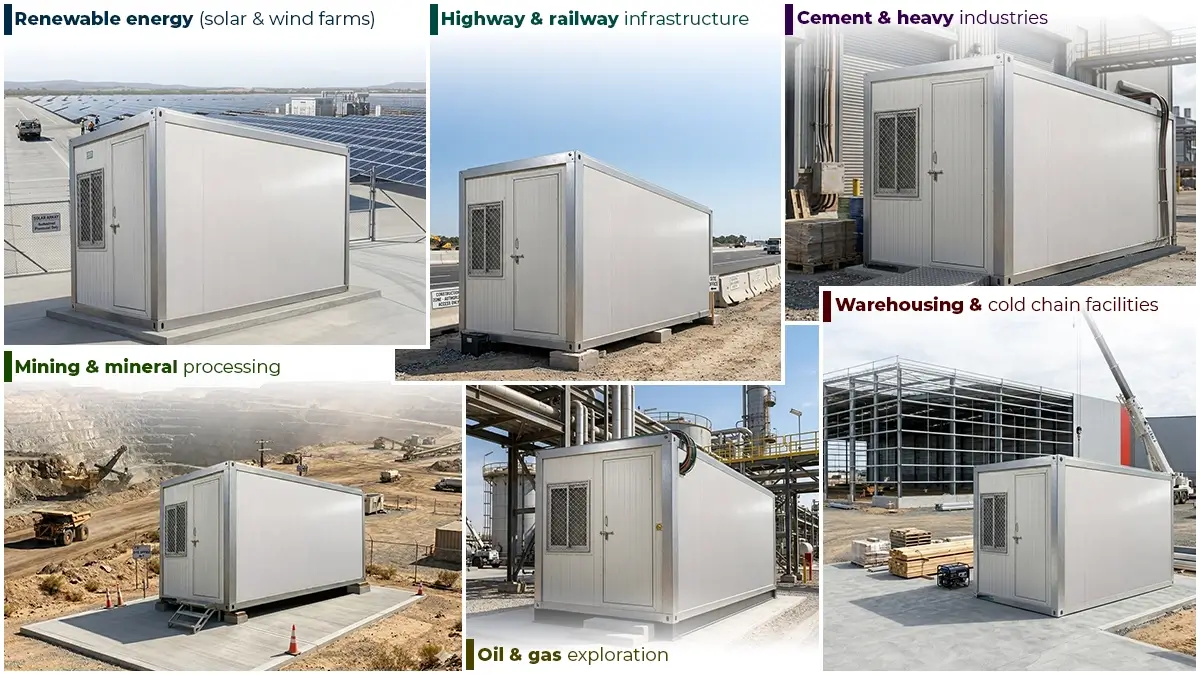
In 2026, modular construction is enabling remote project execution across several of India’s highest-growth industrial sectors:
- Renewable Energy — Solar farms and wind energy projects in Rajasthan, Gujarat, Tamil Nadu, and the Northeast use modular cabins for control rooms, worker accommodation, and security checkpoints during construction and long-term operations.
- Mining and Mineral Processing — Remote mining operations in Jharkhand, Odisha, Chhattisgarh, and Rajasthan require durable, rapidly deployable site infrastructure for administrative offices, labs, and labour accommodation.
- Highway and Railway Infrastructure — Long-linear projects with moving worksites need infrastructure that can be relocated as the construction front advances.
- Oil and Gas Exploration — Upstream onshore operations require weather-rated, self-contained facility units for personnel and equipment.
- Rural Warehousing and Cold Chain — As India’s cold chain network expands into Tier 3 markets, modular structures provide rapid, scalable warehouse and processing infrastructure where conventional supply chains don’t reach.
- Heavy Industry and Cement — Greenfield plant development in remote industrial zones requires early site establishment infrastructure before permanent facilities are ready.
Sustainability Advantages in Remote Locations
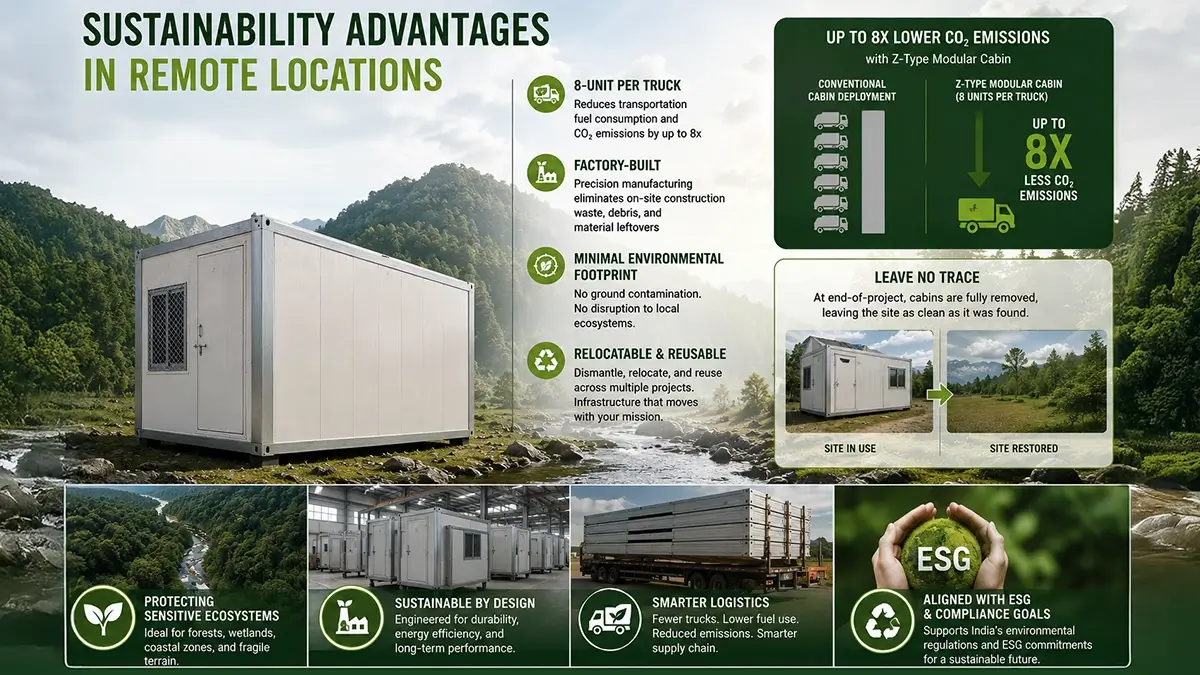
Remote project sites frequently operate in environmentally sensitive zones — near forests, water bodies, coastal areas, or fragile ecosystems. The Z-Type Modular Cabin’s 8-unit-per-truck shipping density reduces transportation fuel consumption and CO₂ emissions by up to 8x compared to equivalent conventional cabin deployments. Factory fabrication eliminates on-site construction waste entirely — there is no debris, no leftover material, and no ground contamination.
At end-of-project, the cabin is dismantled and removed completely, leaving minimal trace on the site. This aligns directly with India’s evolving environmental compliance requirements for industrial project approvals, and with the ESG commitments of India’s listed infrastructure and energy companies.
EPACK Z-Type Modular Cabin: Technical Specifications
The EPACK Z-Type Modular Cabin is engineered to the highest standards of rapid deployment infrastructure. Below is the complete technical specification:
| Specification | Value | Notes |
|---|---|---|
| Expanded Size | 5,900 × 2,400 × 2,470 mm | Fully functional workspace |
| Folded / Transport Size | 5,900 × 2,400 × 510 mm | Minimal height for max. loading density |
| Tare Weight | 1,500 KG | Lightweight engineered steel frame |
| Usable Interior Area | ~14.16 m² | Optimised for workspace efficiency |
| Shipping Density | 8 units per truck | Dramatically reduces logistics cost |
| Installation Time | 10 minutes | Lift → Unfold → Secure |
| Wall Panels | PUR / PIR Sandwich Panels | 50mm thickness (customisable) |
| Floor System | 18mm Fibre Cement Board | Durable, level surface |
| Electrical (Pre-installed) | LED Lights, Sockets, Switches | Ready for immediate use |
| Wind Resistance | Grade 11 (120 km/h) | Operational in extreme weather |
| Seismic Resilience | Grade 8 | Safe in seismically active zones |
| Temperature Range | -25°C to +50°C | Suitable for all Indian climates |
| Service Lifespan | 15–20 Years | Long-term reusable asset |
Applications include: site offices, worker dormitories and labour accommodation, portable medical posts and first-aid stations, security and access control checkpoints, temporary classrooms, kiosks, and emergency command centres.
Integration with PEB and Insulated Panel Systems
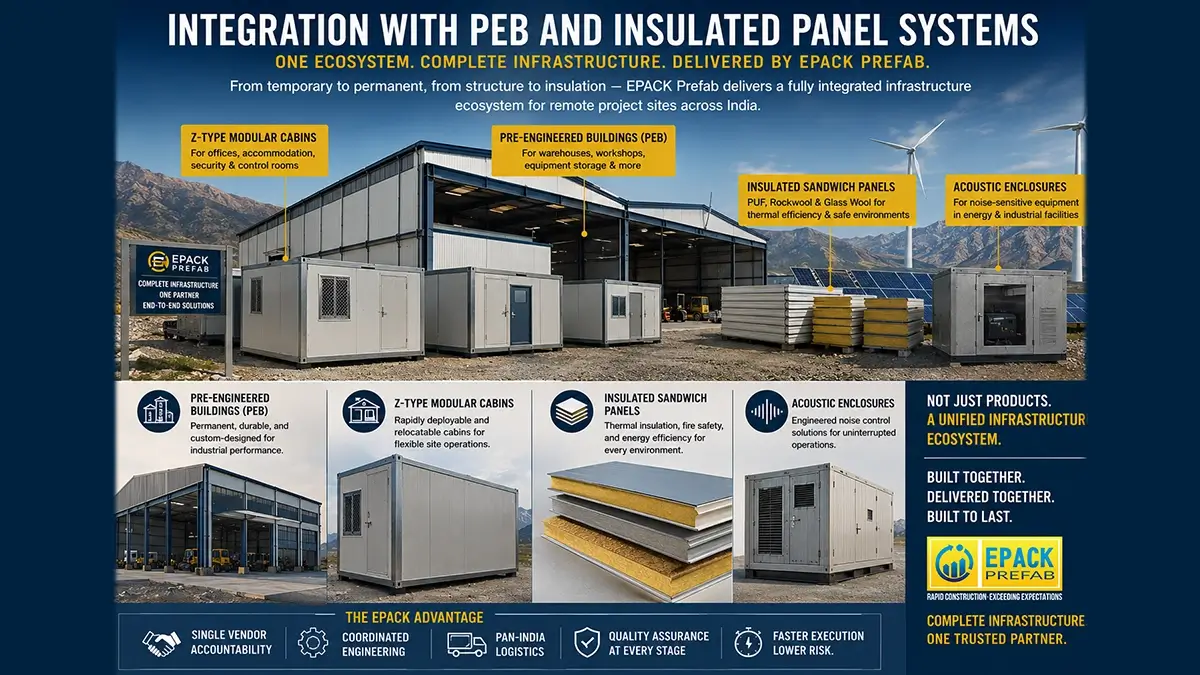
One of EPACK Prefab’s key competitive advantages is the ability to provide a complete, integrated infrastructure ecosystem for remote project sites — not just modular cabins in isolation, but the full built environment a remote project requires.
- Pre-Engineered Buildings (PEB) for permanent warehouses, equipment storage bays, and maintenance workshops at the site.
- Z-Type Modular Cabins for administrative offices, accommodation blocks, security checkpoints, and control rooms during construction and operations.
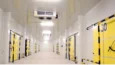
- PUF, Rockwool, and Glass Wool insulated sandwich panels for temperature-controlled zones within warehouses, cold storage areas, and energy-efficient building envelopes.
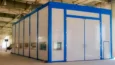
- Acoustic enclosures for noise-sensitive industrial equipment in remote energy and processing facilities.
This integrated delivery — single vendor, coordinated engineering, pan-India logistics — is what distinguishes EPACK Prefab from suppliers offering only one product category. Project owners receive a unified infrastructure solution delivered and installed under a single point of accountability.
Why Choose EPACK Prefab for Remote Project Infrastructure
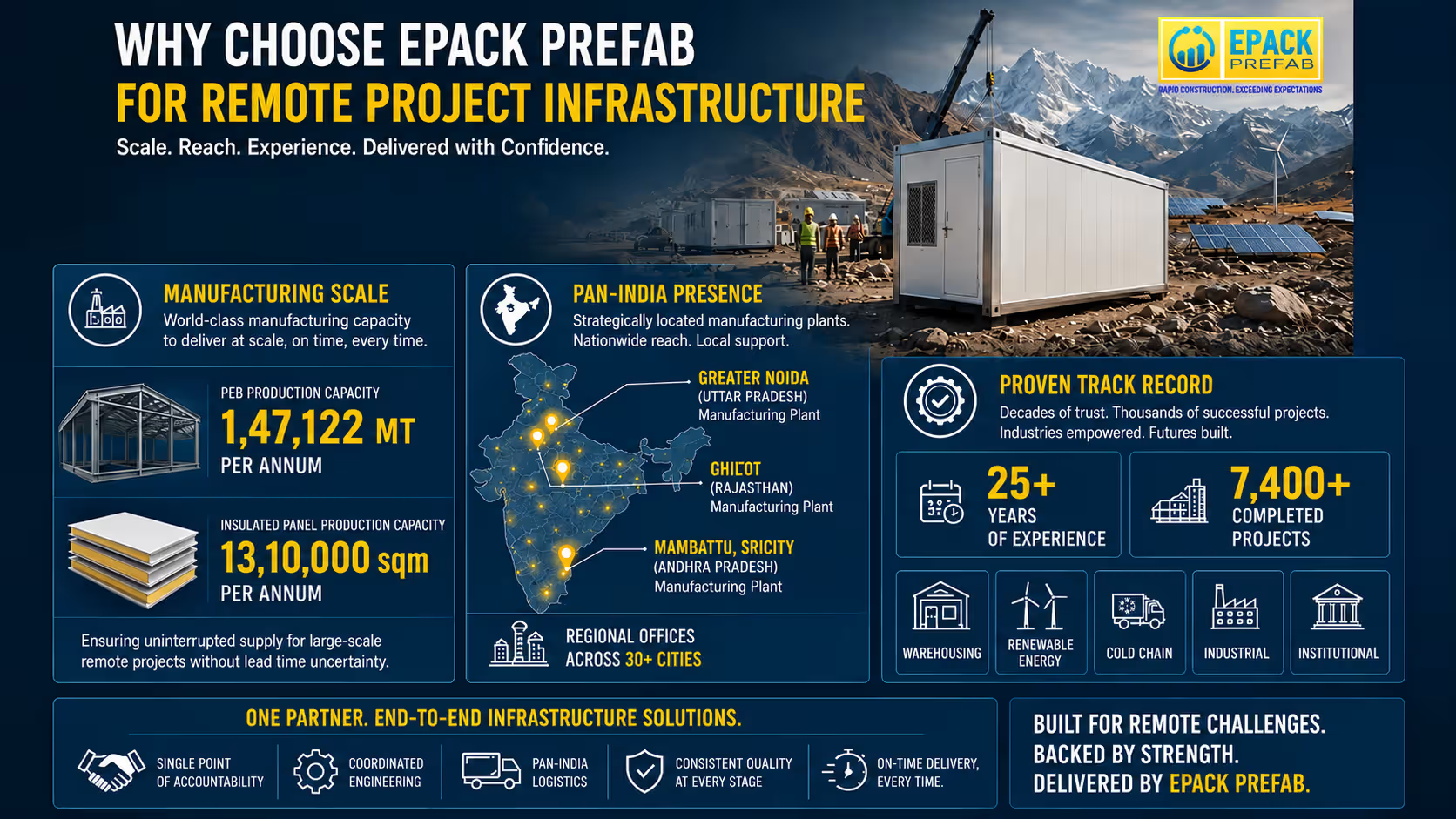
- Manufacturing Scale — Annual PEB production capacity of 1,47,122 MT and insulated panel production of 13,10,000 sqm, ensuring supply for large-scale remote projects without lead time uncertainty.
- Pan-India Presence — Manufacturing plants in Greater Noida (UP), Ghiloth (Rajasthan), and Mambattu near Sricity (Andhra Pradesh), with regional offices across 30+ cities.
- Proven Track Record — 25+ years of experience and 7,400+ completed projects across warehousing, renewable energy, cold chain, industrial, and institutional sectors.
Frequently Asked Questions
Q: How quickly can EPACK Z-Type Modular Cabins be deployed at a remote site?
The EPACK Z-Type Modular Cabin is operational within 10 minutes of delivery, using a 3-step process of Lift, Unfold, and Secure. Because 8 units fit on a single truck, an entire site office complex of 8 cabins can arrive in one vehicle and be fully deployed in under 2 hours.
Q: Can modular cabins withstand the extreme weather conditions found at remote Indian project sites?
Yes. The Z-Type Modular Cabin is rated for Grade 11 wind resistance (120 km/h), Grade 8 seismic resilience, and operates across a temperature range of -25°C to +50°C. The PUR/PIR insulated wall panels maintain interior comfort across India’s full range of climatic conditions — from Rajasthan desert heat to Himalayan cold.
Q: Are EPACK modular cabins reusable across multiple project sites?
Yes. The Z-Type cabin is designed for multiple deployment cycles across its 15–20 year service life. It can be fully dismantled, transported, and reinstalled at a new location with no structural compromise. Companies managing multi-site project portfolios can treat modular cabins as long-term capital assets.
Q: Can EPACK supply both modular cabins and permanent industrial buildings for the same project?
Absolutely. EPACK Prefab provides a complete integrated infrastructure solution — Z-Type Modular Cabins for temporary and semi-permanent facilities, Pre-Engineered Buildings for permanent industrial structures, and insulated sandwich panels for energy-efficient envelopes — all from a single manufacturer.
Q: What is the minimum order quantity for Z-Type Modular Cabins?
There is no mandated minimum order quantity. EPACK supplies both single-unit requirements for small site offices and large-scale orders for worker accommodation villages on multi-thousand-crore infrastructure projects. Contact our team at enquiry@epack.in for project-specific requirements.
Conclusion
As India’s industrial and infrastructure footprint extends deeper into remote geographies, the limitations of conventional construction become increasingly costly — in time, money, labour, and environmental impact. Modular construction solves these challenges not as a compromise, but as an engineered solution specifically designed for the demands of remote project execution.
Speed of deployment, optimised transportation, durability in harsh conditions, low labour dependency, and reusability across projects make modular infrastructure the most practical and financially sound choice for developers operating at India’s industrial frontier. EPACK Prefab’s Z-Type Modular Cabin — deployable in 10 minutes, carrying 8 units per truck, and rated for the most extreme Indian conditions — is the benchmark product in this category.
Plan Your Remote Project Infrastructure with EPACK Prefab
Connect with our engineering team for a customised modular construction solution — wherever your project is located in India.
Phone: +91-8130444466 Email: enquiry@epack.in
Build Smarter — Wherever the Project Takes You.