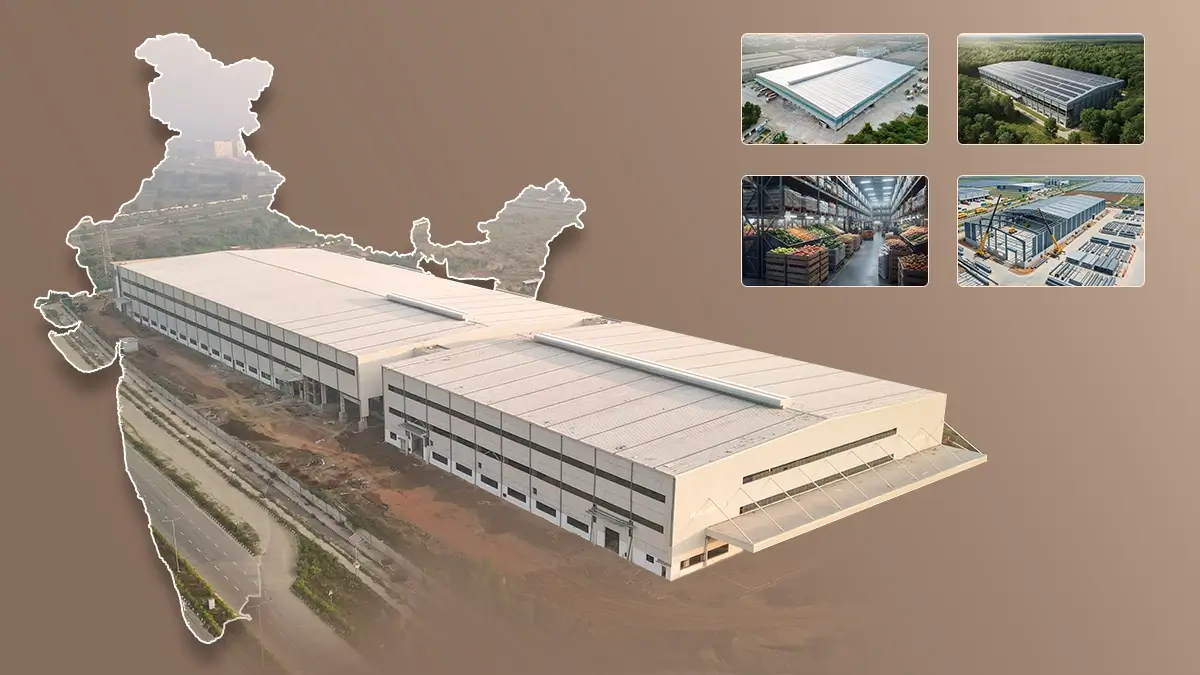
India’s industrial ecosystem is evolving rapidly in 2026. With strong policy support, rising private investment, and global supply chain realignment, the country is witnessing a new wave of infrastructure expansion.
From smart factories and mega warehouses to renewable energy parks and cold chain facilities, industrial construction is becoming faster, more efficient, and technology-driven.
Here are the Top 7 Industrial Infrastructure Trends in India (2026 Edition) that are shaping the future of construction and manufacturing.
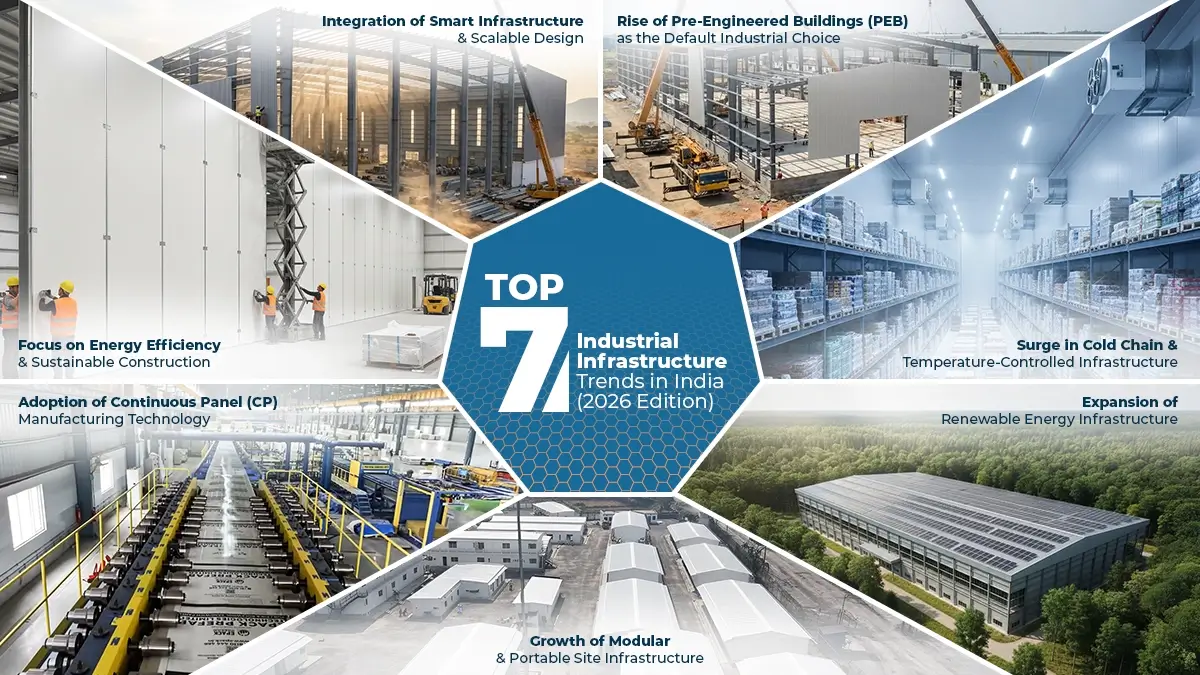
1️⃣Rise of Pre-Engineered Buildings (PEB) as the Default Industrial Choice
Pre-Engineered Buildings are no longer an alternative — they are becoming the standard for industrial construction.
Industries prefer PEB structures because they offer:
- Faster construction timelines
- Optimized steel usage
- Lower lifecycle costs
- Easy scalability
Warehouses, manufacturing plants, and logistics hubs across India are increasingly adopting PEB systems to meet growing demand.
2️⃣Surge in Cold Chain & Temperature-Controlled Infrastructure
With growth in:
- Food processing
- E-commerce grocery delivery
- Pharmaceuticals
- Export-oriented agriculture
India is investing heavily in cold storage and cold rooms.
Modern cold chain facilities are now built using:
- PUF insulated sandwich panels
- Energy-efficient roofing systems
- Engineered steel structures
Energy optimization and operational cost reduction are major priorities in this segment.
3️⃣Expansion of Renewable Energy Infrastructure
India’s renewable energy expansion continues to drive industrial development.
Solar parks, wind farms, and hybrid energy plants require:
- Modular site offices
- Control rooms
- Utility buildings
- Pre-Engineered steel structures
Infrastructure supporting renewable energy projects is increasingly modular and prefabricated for faster deployment in remote locations.
4️⃣Growth of Modular & Portable Site Infrastructure
With projects expanding into remote and semi-urban areas, modular construction is becoming essential.
Industries are using:
- Z-Type modular cabins
- Portable site offices
- Workforce accommodation units
- Prefabricated utility blocks
These solutions reduce setup time and improve project efficiency, especially in large-scale infrastructure projects.
5️⃣Adoption of Continuous Panel (CP) Manufacturing Technology
Insulated panel manufacturing is undergoing technological transformation.
Continuous Panel (CP) lines are enabling:
- Uniform insulation quality
- Faster panel production
- Reduced wastage
- Better thermal performance
This is particularly important for cold storage, data centers, clean environments, and industrial enclosures.
6️⃣Focus on Energy Efficiency & Sustainable Construction
Sustainability is now a central requirement for industrial projects.
Key developments include:
- High-performance insulated panels
- Energy-efficient roofing systems
- Natural ventilation designs
- Reduced material wastage
Green building practices are becoming integrated into industrial infrastructure planning, not just commercial buildings.
7️⃣Integration of Smart Infrastructure & Scalable Design
Modern industrial facilities are designed with future expansion in mind.
Developers are prioritizing:
- Modular layouts
- Flexible floor plans
- Expandable steel structures
- Integrated infrastructure planning
This allows companies to scale operations without major structural disruptions.
What These Trends Mean for Industrial Developers
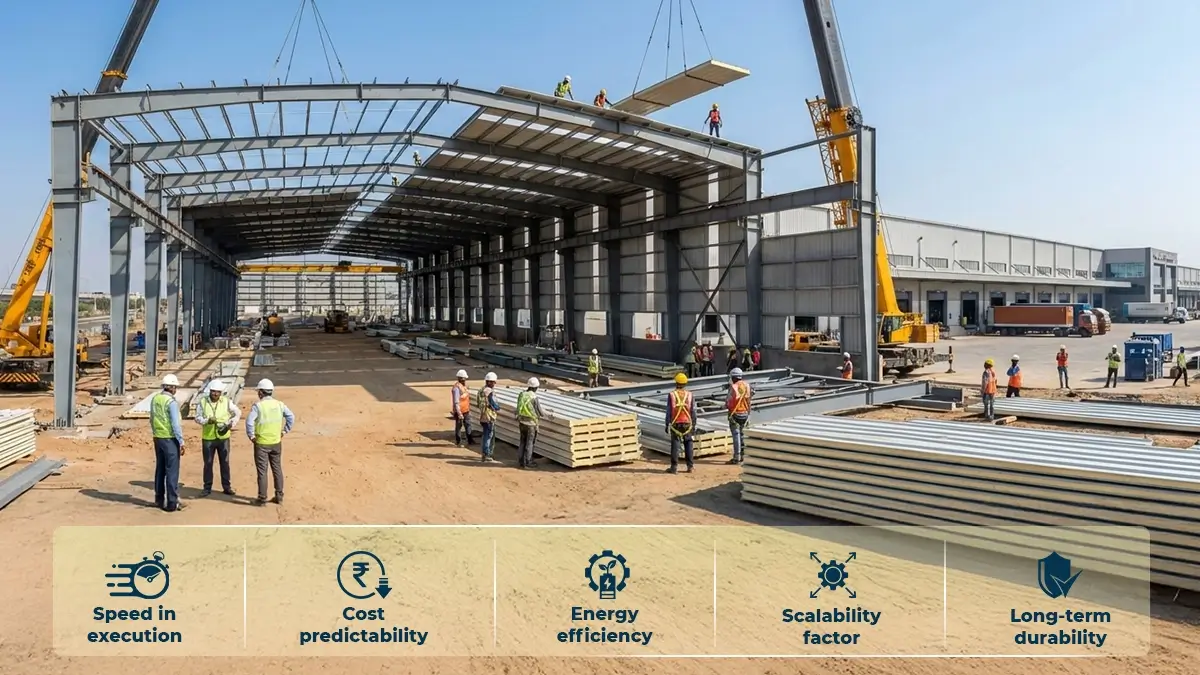
The 2026 industrial infrastructure landscape demands:
- Speed in execution
- Cost predictability
- Energy efficiency
- Scalability
- Long-term durability
Companies that adopt prefabricated and engineered solutions gain a competitive advantage by reducing time-to-operation and lifecycle costs.
How EPACK Prefab Aligns with 2026 Infrastructure Trends
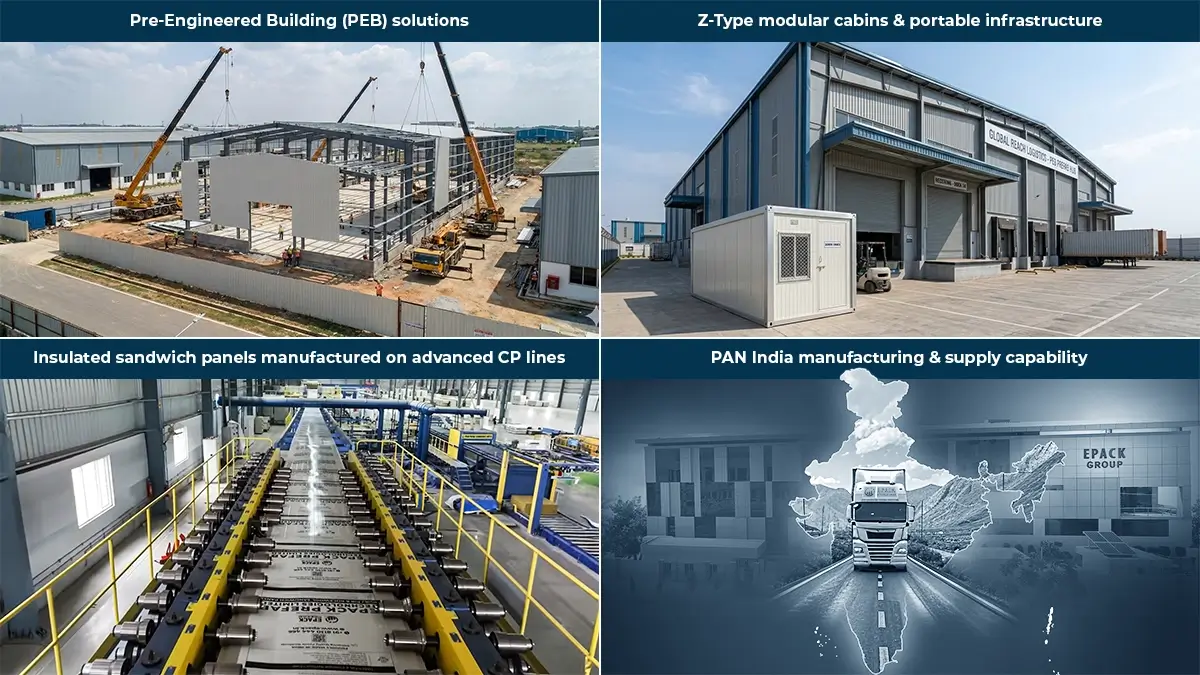
EPACK Prefab supports India’s evolving industrial landscape with:
- Pre-Engineered Building (PEB) solutions
- Insulated sandwich panels manufactured on advanced CP lines
- Z-Type modular cabins and portable infrastructure
- PAN India manufacturing and supply capability
With 25+ years of experience and 7400+ projects delivered, EPACK Prefab provides scalable solutions aligned with modern industrial needs.
Conclusion
India’s industrial infrastructure in 2026 is defined by speed, modularity, technology, and sustainability.
The top trends — from PEB growth and cold chain expansion to modular site infrastructure and CP manufacturing — are reshaping how industries build and operate.
Businesses that embrace these trends today will be better positioned for long-term growth and operational efficiency.
For industrial infrastructure solutions and project discussions:
📩 enquiry@epack.in
📞 +918130444466
Let’s build the future of industrial India — smarter and faster.