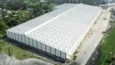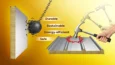
In 2026, industrial construction in India is moving toward speed, precision, and energy efficiency. Whether it’s cold storage facilities, factories, data centres, warehouses, or infrastructure projects, the demand for high-performance insulated panels is at an all-time high.
But not all insulated panels are manufactured the same way.
One of the biggest technological advancements in panel manufacturing is Continuous Panel (CP) Technology. For industrial buyers, understanding CP technology is crucial when selecting a reliable insulated panel supplier.
This guide explains what CP technology is, how it works, and why it matters for your project.
What Is Continuous Panel (CP) Technology?
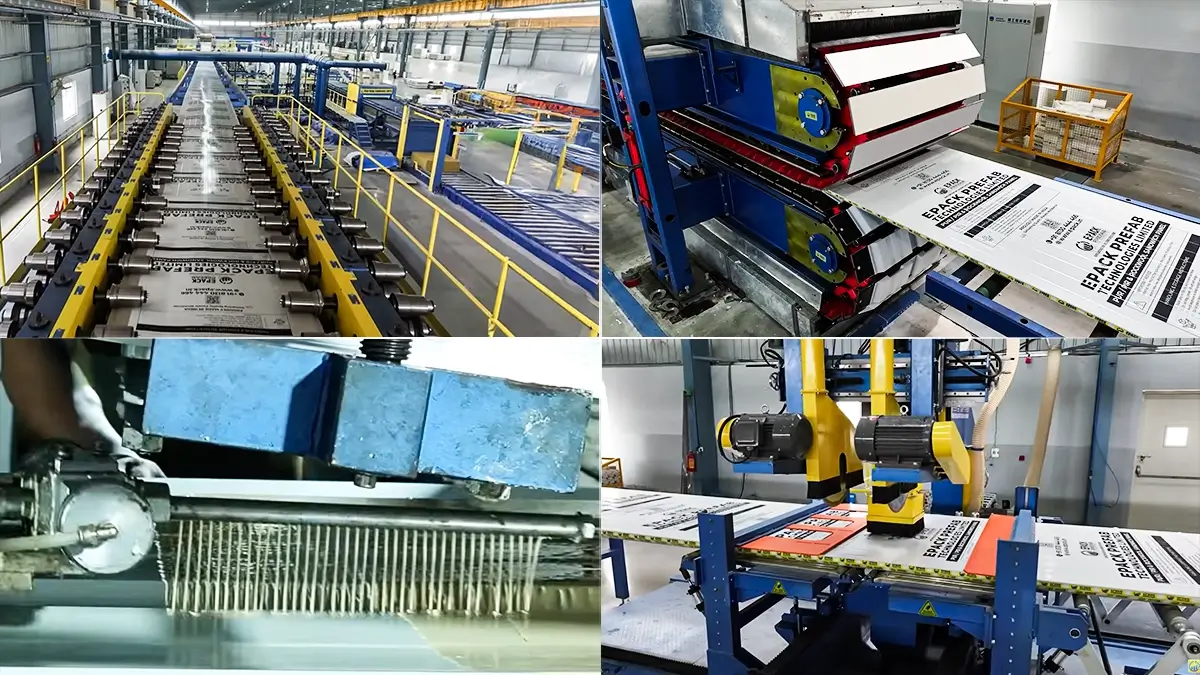
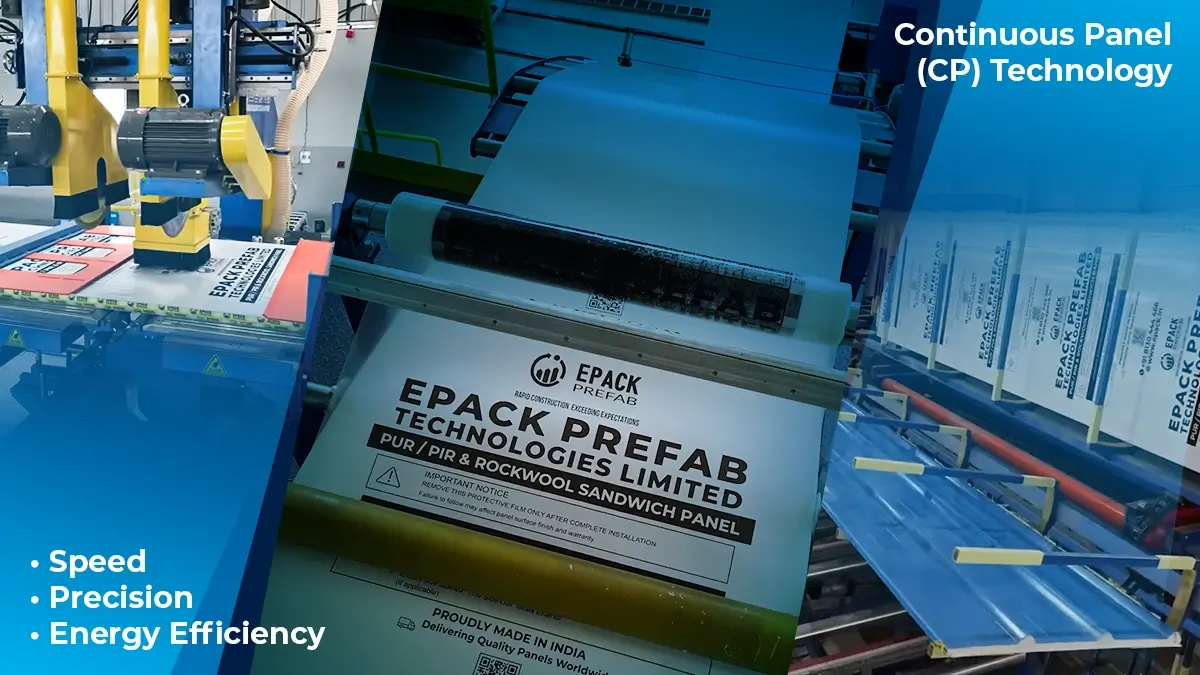
Continuous Panel (CP) Technology is an automated manufacturing process used to produce insulated sandwich panels in a continuous, controlled production line.
Unlike batch or manual production methods, CP lines:
- Manufacture panels in a continuous flow
- Ensure uniform insulation distribution
- Maintain consistent bonding strength
- Deliver precise thickness and density control
This results in panels that are structurally stronger, thermally efficient, and dimensionally accurate.
How CP Technology Works (Simplified Process)
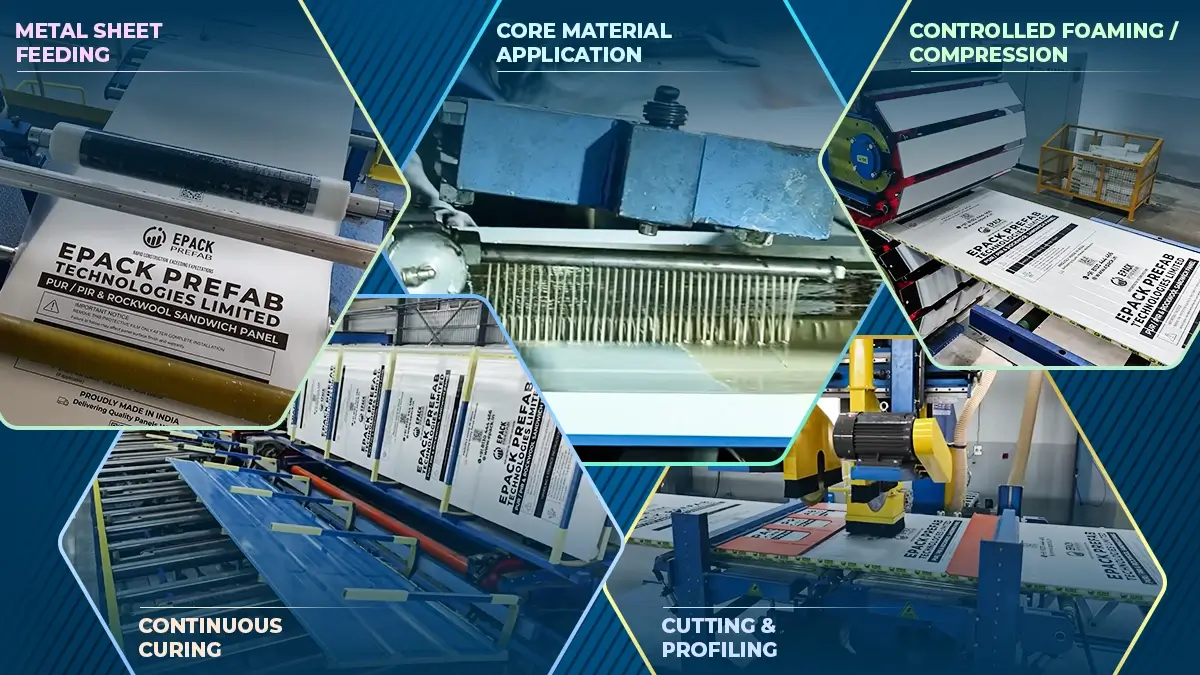
Here’s how insulated panels are typically produced using CP lines:
1️⃣ Metal Sheet Feeding
Pre-coated steel sheets are continuously fed into the production line.
2️⃣ Core Material Application
Insulation material such as:
- PUF (Polyurethane Foam)
- Rockwool
- Glass Wool
is placed or injected between the metal sheets.
3️⃣ Controlled Foaming / Compression
The insulation core is evenly spread and bonded under precise pressure and temperature control.
4️⃣ Continuous Curing
Panels move through curing zones to achieve full structural strength and thermal stability.
5️⃣ Cutting & Profiling
Panels are cut to custom lengths based on project requirements.
This automated system ensures consistent product quality across large volumes.
Why CP Technology Matters for Industrial Buyers
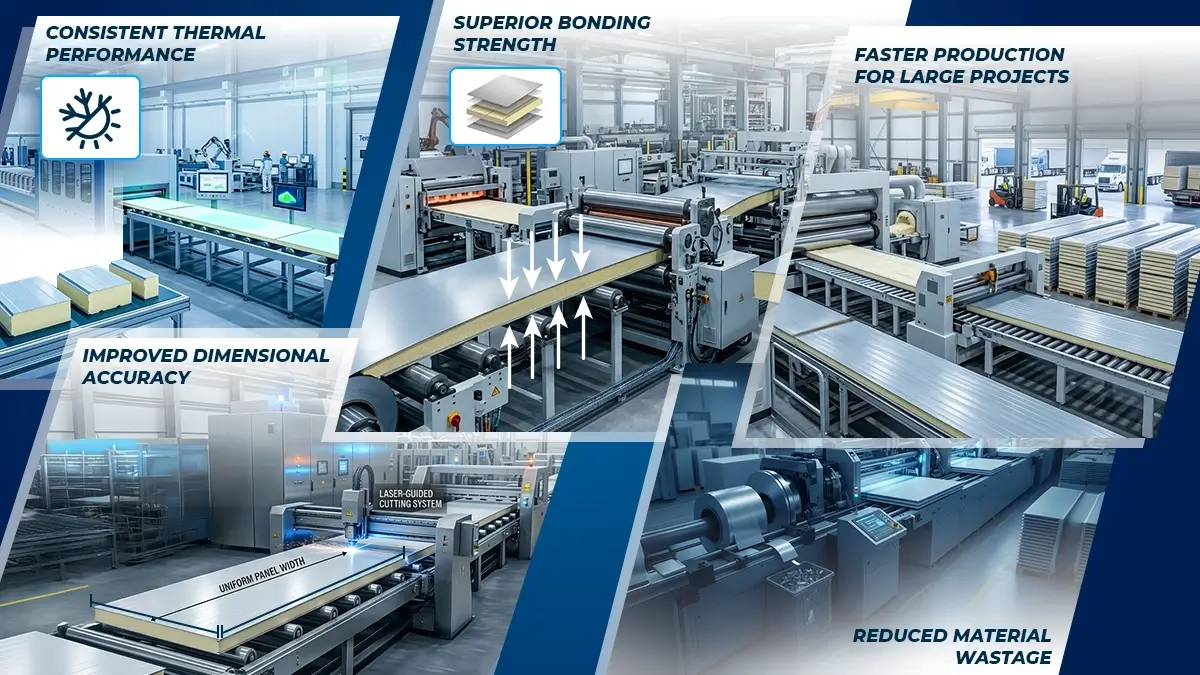
1️⃣ Consistent Thermal Performance
In applications like cold storage and temperature-controlled facilities, insulation consistency is critical.
CP technology ensures:
- Uniform density throughout the panel
- Stable thermal conductivity
- Reduced risk of thermal leakage
This directly impacts operational energy costs.
2️⃣ Superior Bonding Strength
Because the insulation core is bonded under controlled conditions, CP-manufactured panels offer:
- Stronger adhesion between core and metal sheets
- Better structural integrity
- Reduced delamination risk
This enhances panel durability and lifespan.
3️⃣ Faster Production for Large Projects
Industrial projects often require large panel quantities within tight timelines.
CP lines enable:
- High-speed manufacturing
- Bulk order capability
- On-time delivery
For EPC contractors and developers, this reliability is essential.
4️⃣ Improved Dimensional Accuracy
Precision is critical for:
- Clean rooms
- Data centres
- Cold rooms
- Industrial enclosures
Continuous manufacturing ensures:
- Accurate thickness control
- Uniform panel width
- Tight tolerances
This reduces installation errors and project delays.
5️⃣ Reduced Material Wastage
Automated production minimizes:
- Core material wastage
- Metal sheet loss
- Defective panels
This improves cost efficiency and supports sustainable manufacturing practices.
Applications That Benefit Most from CP Technology
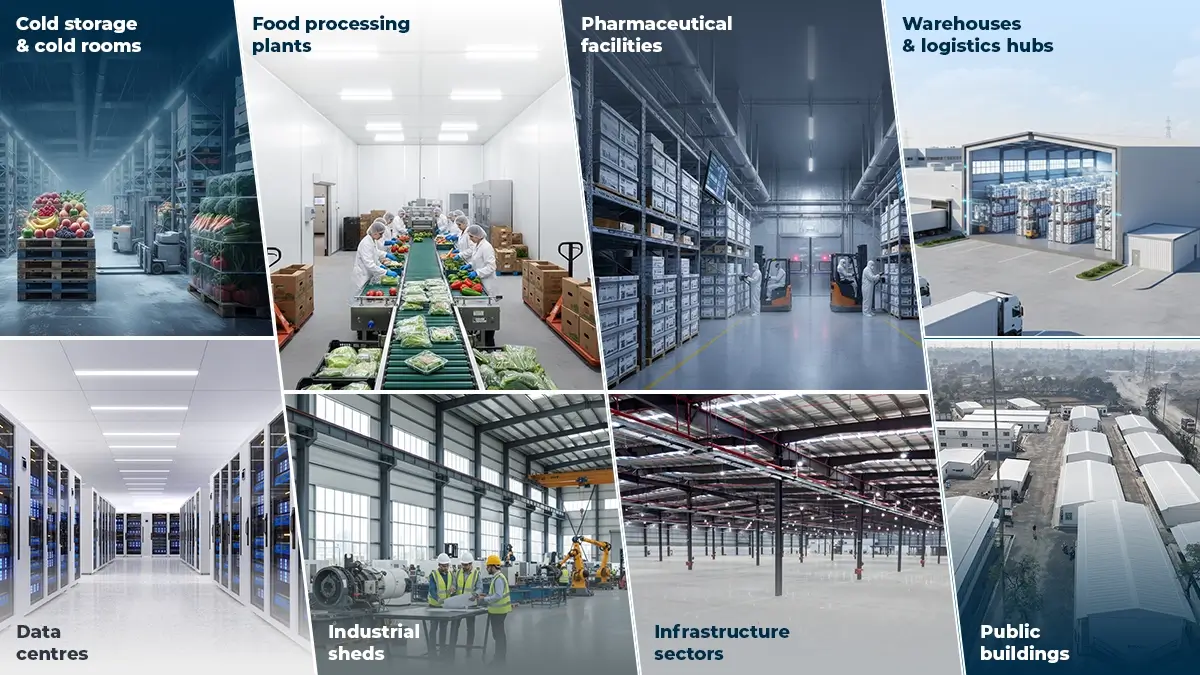
Industrial sectors benefiting from CP-manufactured panels include:
- Cold storage & cold rooms
- Food processing plants
- Pharmaceutical facilities
- Warehouses & logistics hubs
- Data centres
- Industrial sheds
- Infrastructure & public buildings
Where performance reliability is critical, CP technology provides added assurance.
CP Technology vs Conventional Panel Manufacturing
| Feature | Conventional Manufacturing | Continuous Panel (CP) Technology |
| Production Method | Batch-based | Continuous automated line |
| Insulation Consistency | Variable | Uniform |
| Bond Strength | Moderate | High |
| Speed | Slower | High-volume capable |
| Quality Control | Limited | Factory-controlled precision |
For large-scale industrial buyers, the difference is significant.
Why Manufacturing Capability Matters
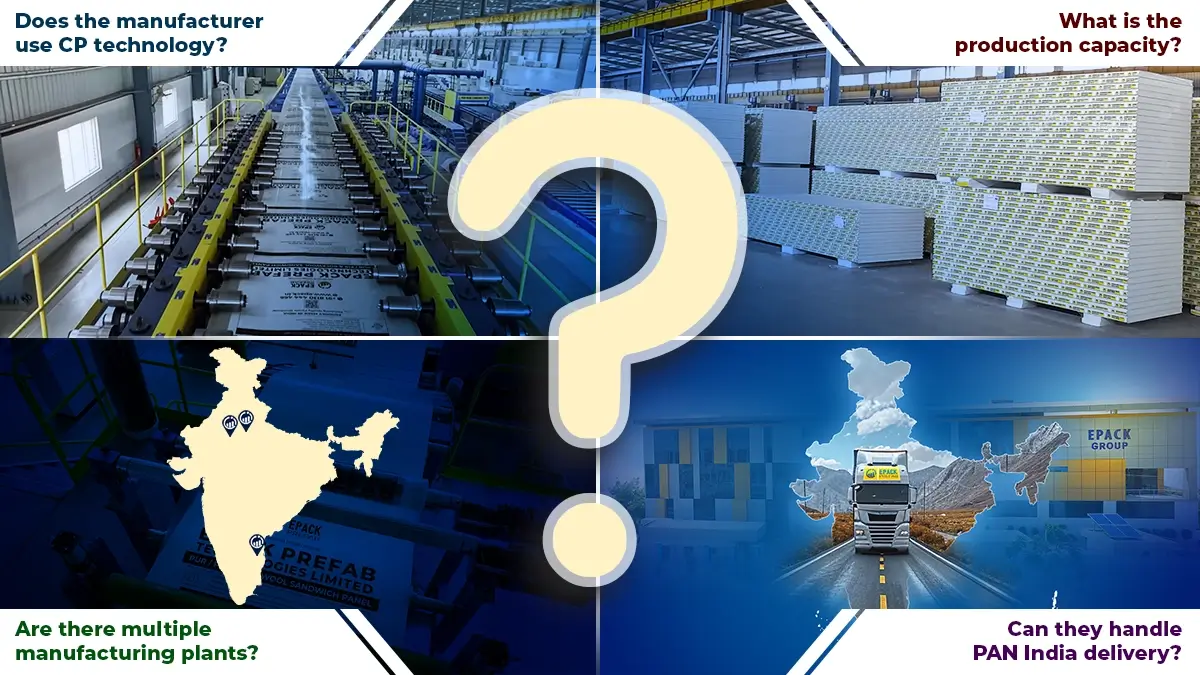
When selecting a panel supplier, industrial buyers should consider:
- Does the manufacturer use CP technology?
- What is the production capacity?
- Are there multiple manufacturing plants?
- Can they handle PAN India delivery?
Advanced manufacturing capability directly affects product reliability and project timelines.
How EPACK Prefab Uses CP Technology
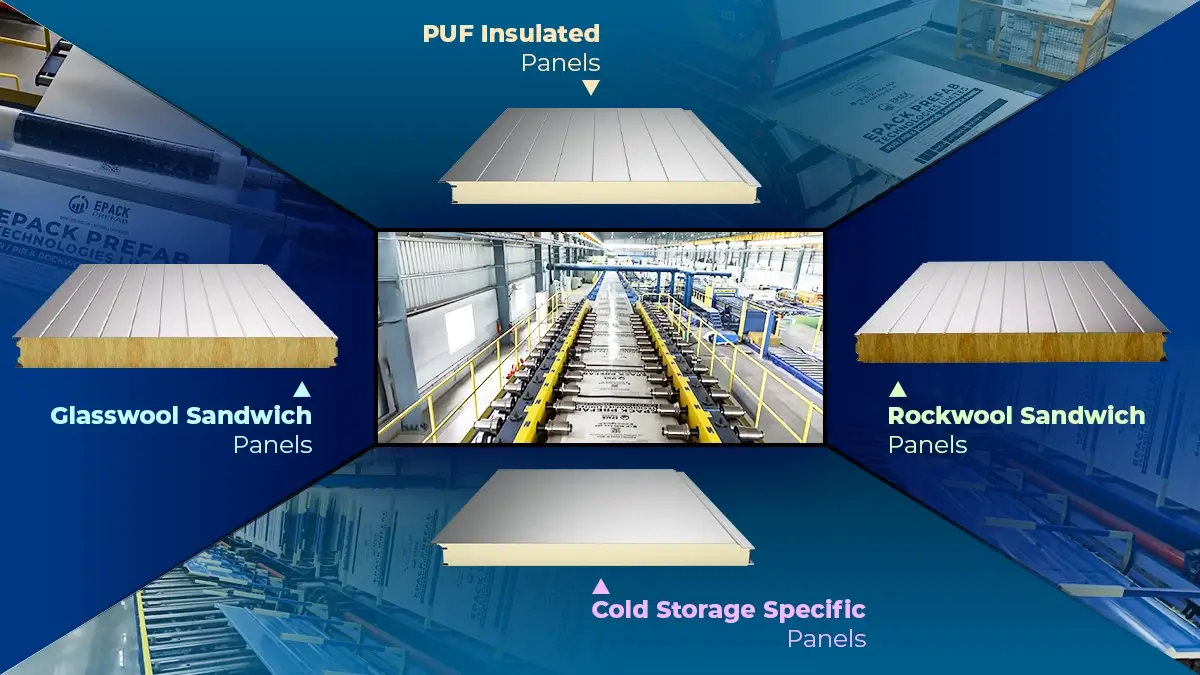
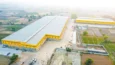
EPACK Prefab has invested in advanced Continuous Panel (CP) lines for manufacturing:
- PUF insulated panels
- Rockwool sandwich panels
- Glass wool panels
- Cold storage-specific panel profiles
With multiple manufacturing facilities and PAN India presence, EPACK Prefab ensures consistent quality and timely supply for large industrial projects.
Final Thoughts
For industrial buyers in 2026, insulated panels are not just construction materials — they are critical components that influence:
- Energy efficiency
- Operational costs
- Structural durability
- Project timelines
Continuous Panel (CP) Technology ensures the level of precision and consistency required for modern industrial infrastructure.
Before placing your next bulk panel order, make sure your supplier is equipped with advanced CP manufacturing capability.
For panel specifications or project inquiries:
📩 enquiry@epack.in
📞 +918130444466
Build with precision. Build with performance.