India’s green building movement has moved well beyond demonstration projects. According to the Indian Green Building Council (IGBC), the country now has more than 20,164 registered green building projects covering 16.42 billion sq. ft. These projects are associated with estimated annual savings of 66.4 billion units of energy and a reduction of 53.1 million tonnes of CO₂ emissions.
As industrial developers and manufacturers increasingly focus on energy efficiency and net-zero targets, an important question arises: can a pre-engineered steel building (PEB) be a genuinely sustainable choice, or is a “green PEB” simply a marketing claim? The answer depends on how the building is designed, manufactured, constructed and operated. PEB systems can support sustainability through efficient steel design, factory-based fabrication, reduced on-site material waste, and the use of insulated panels to improve building-envelope performance. However, these advantages alone do not make a building green or net-zero. Achieving that goal requires deliberate decisions about material sourcing, energy performance, renewable energy, water use, waste management and, where relevant, green building certification.
Why Steel Starts From a Sustainability Advantage
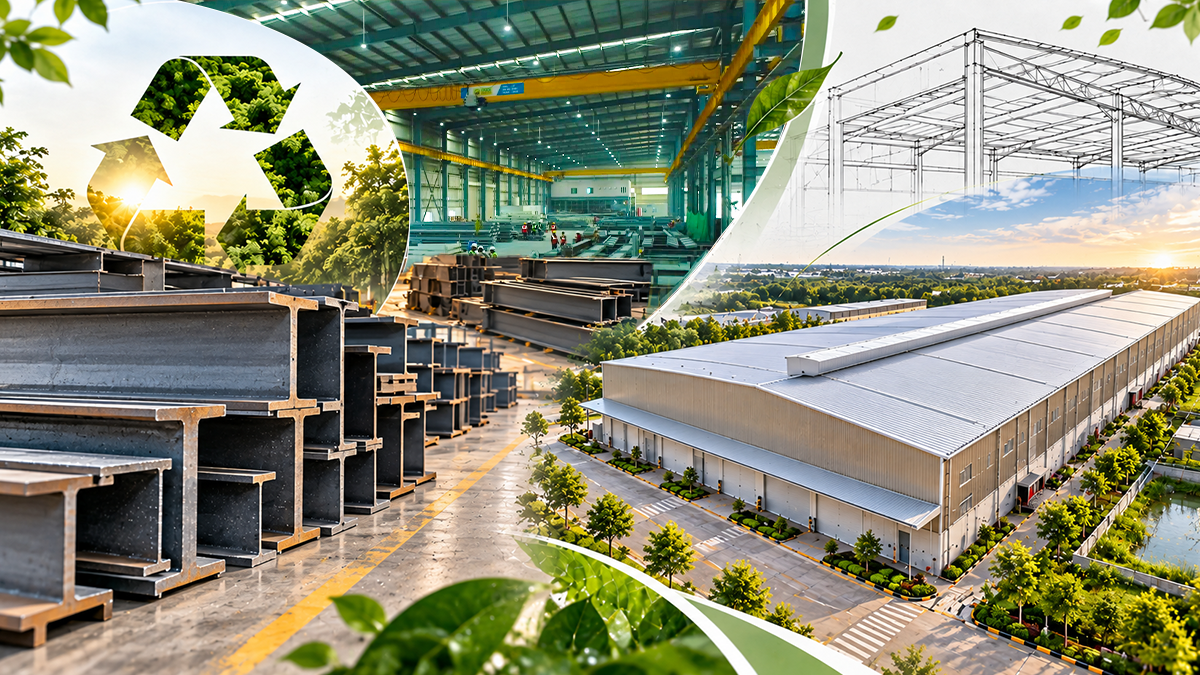
Structural steel is among the most recycled materials in construction, and a PEB’s factory-fabricated components are cut and formed to precise specifications, which sharply reduces the on-site material wastage that’s common with conventional brick-and-mortar construction. Faster erection also means shorter site activity overall — less fuel burned by site machinery, less dust and disruption, and a smaller construction-phase footprint than an equivalent RCC project running for two to three times as long.
None of that alone earns a certification, but it does mean a PEB project starts several steps ahead when the goal is a lower-impact build.
What Makes a PEB Genuinely ‘Green’
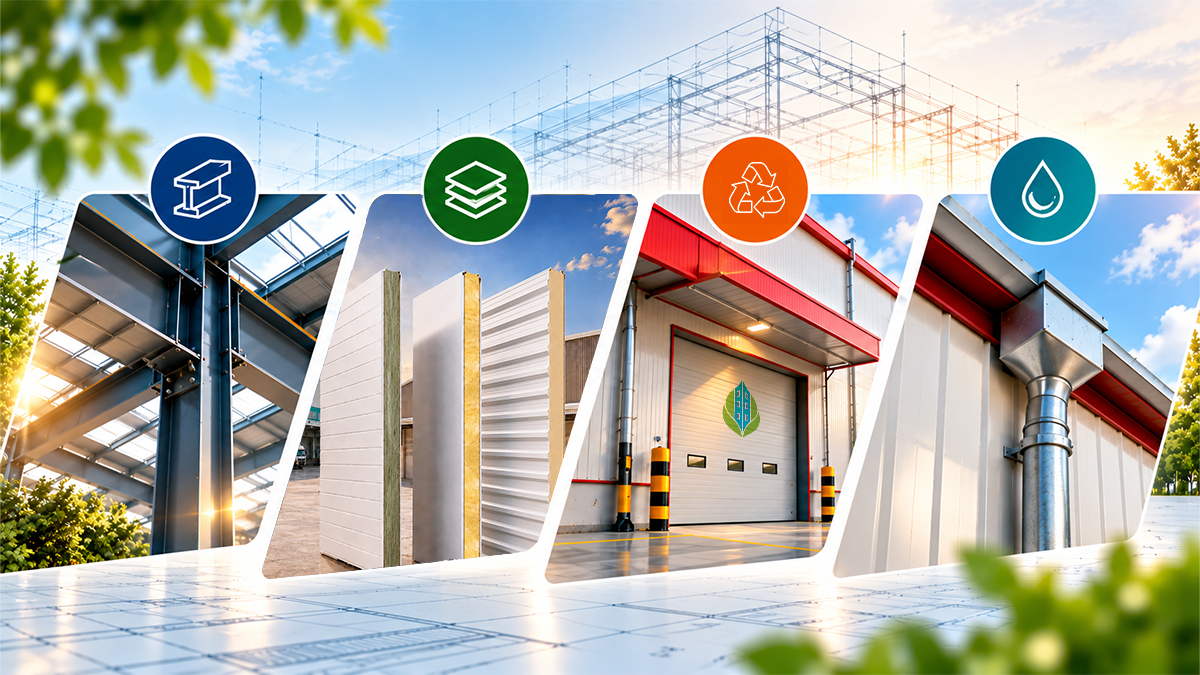
1. Insulated envelope systems that cut operational energy
Insulated sandwich panels — in PUF, EPS, or Rockwool core variants — reduce heat transfer through the roof and walls, which lowers the cooling or heating load an HVAC system has to carry over the building’s operating life. Since operational energy use typically outweighs construction-phase impact over a building’s lifetime, envelope insulation is one of the highest-leverage sustainability decisions in an industrial project.
2. Solar-ready roof design
Designing purlin spacing and roof load capacity to carry a rooftop solar array from day one — rather than retrofitting later — makes on-site renewable generation a straightforward addition instead of an expensive afterthought. This matters directly for manufacturers targeting on-site renewable energy percentages as part of ESG or net-zero commitments.
3. Water and site-planning measures
Rainwater harvesting provisions, permeable paving, and native landscaping are often added at the civil works stage alongside a PEB shell, contributing to GRIHA and IGBC site-planning and water-efficiency criteria.
4. Recyclable, low-waste material sourcing
Steel’s recyclability at end-of-life, combined with reduced fabrication waste, supports the materials-related credits in both IGBC and GRIHA rating systems — an increasingly visible line item as embodied carbon reporting becomes more common in industrial real estate.
IGBC and GRIHA: What Applies to Industrial Buildings
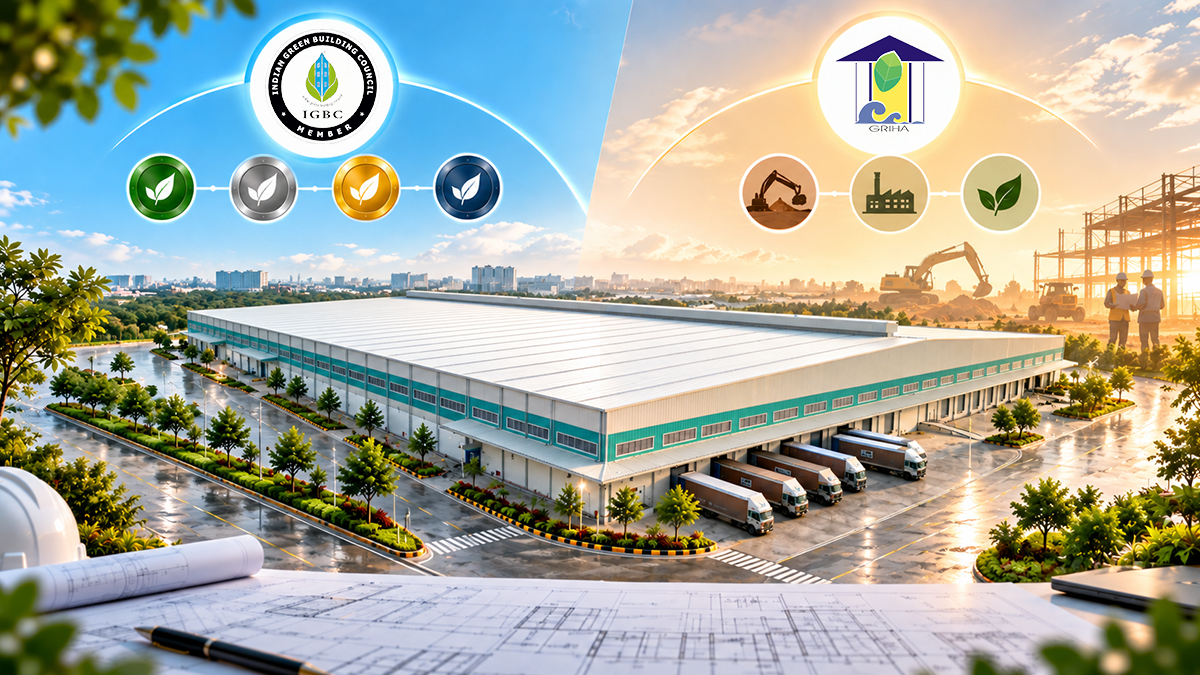
IGBC, founded by the Confederation of Indian Industry in 2001, offers a dedicated Green Factory Buildings rating system alongside its better-known green homes and green new buildings programmes, with certification levels from Certified through Platinum. GRIHA, developed by TERI and adopted by the Ministry of New and Renewable Energy, evaluates buildings across their full lifecycle — including construction-phase measures like soil erosion control and worker safety — and can be applied to large industrial and institutional projects as well as government buildings, for which it’s mandatory.
For an industrial developer or manufacturer, pursuing either certification means bringing a registered assessor and documentation process into the project early, ideally at the design stage, since several of the highest-value credits (envelope performance, solar-readiness, material sourcing) are far cheaper to build in than to retrofit.
Where This Applies
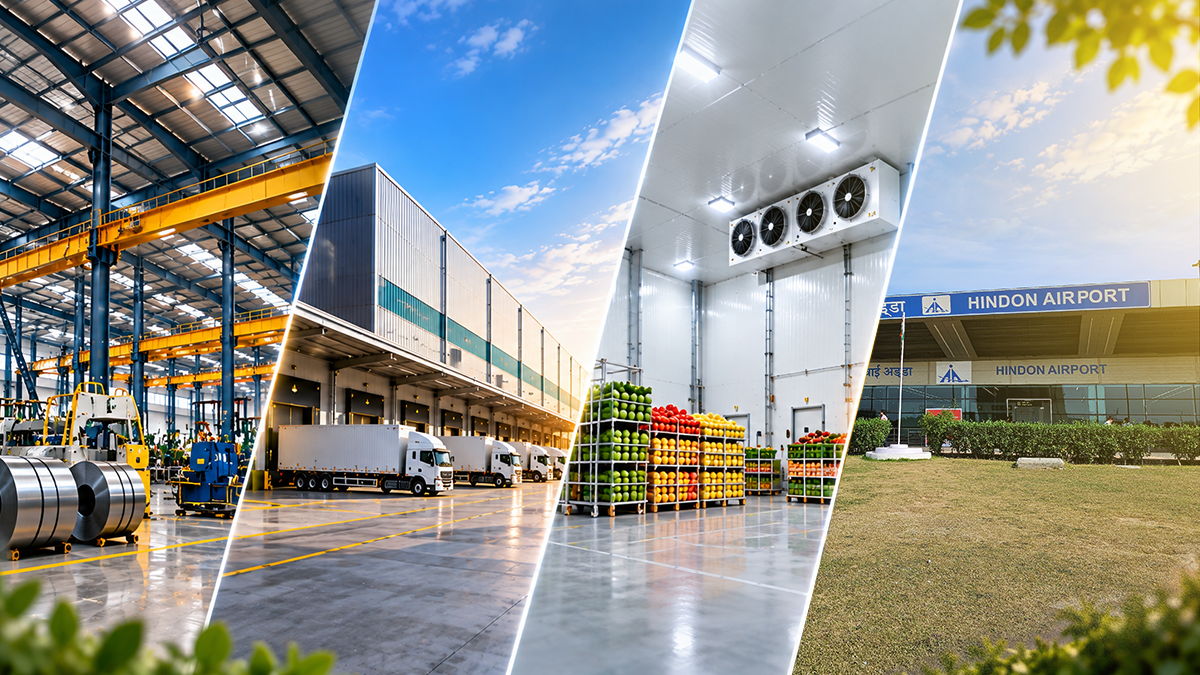
- Manufacturing facilities pursuing IGBC Green Factory or GRIHA industrial certification
- Warehousing and logistics parks targeting corporate ESG or ESG-linked financing requirements
- Cold storage and food processing units where envelope insulation directly reduces energy cost
- Institutional and government projects where GRIHA certification is a procurement requirement
A Few Design Decisions Worth Making Early
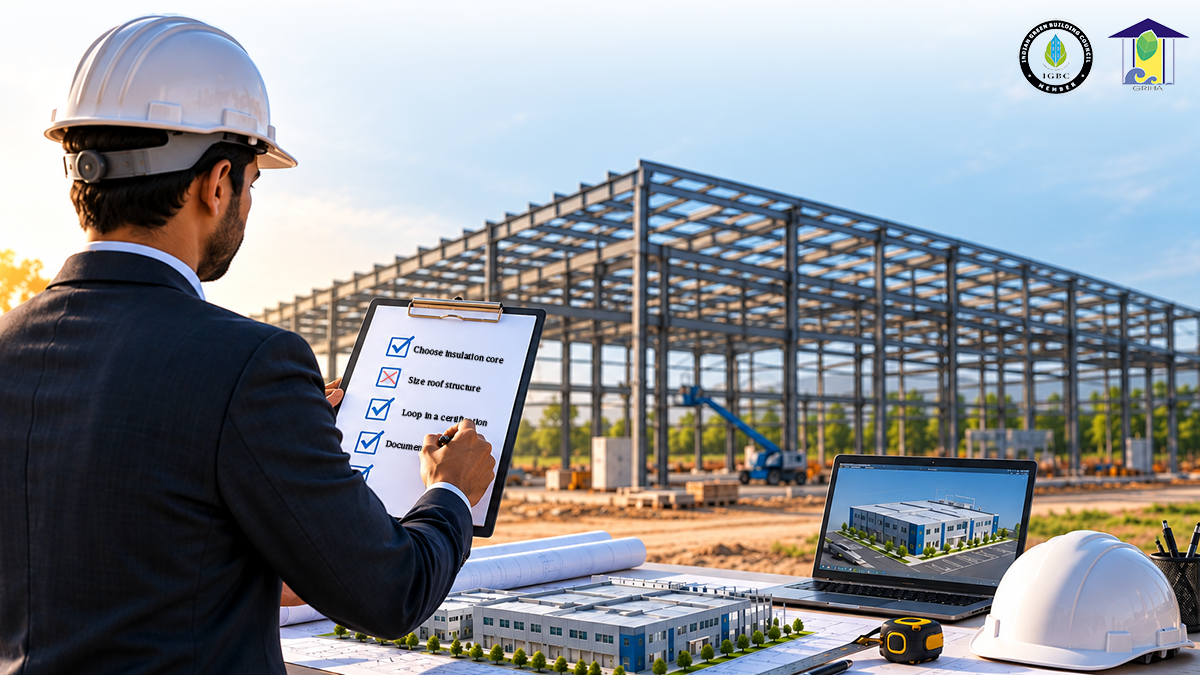
- Choose insulation core (PUF, EPS, Rockwool) based on both thermal performance and fire safety needs for your specific application
- Size roof structure for solar from day one if renewable generation is part of your sustainability roadmap
- Loop in a certification assessor at design stage if IGBC or GRIHA certification is a target, not an afterthought
- Ask your PEB partner for documentation on steel recycled content and panel core composition, which certification assessors will request
Why EPACK Prefab for Sustainable Industrial Construction
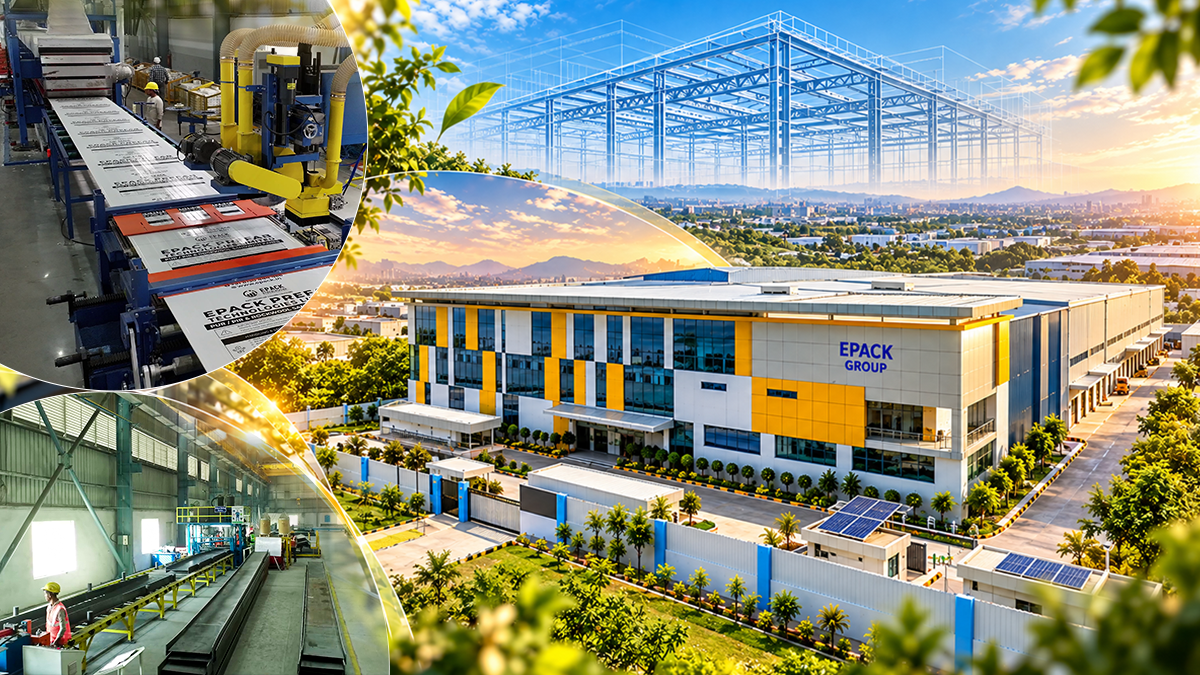
EPACK Prefab manufactures insulated sandwich panels across PUF, EPS, and other variants for energy-efficient building envelopes, alongside its core pre-engineered building and prefabricated structure offerings, built across manufacturing plants in Greater Noida, Ghilot, and Mambattu. With 25+ years of experience and 7,400+ completed projects, EPACK provides the structural and envelope building blocks that support both energy performance and green certification goals. Explore EPACK’s Sandwich Panels solutions
Planning a Sustainable Industrial Building?
Whether you’re targeting IGBC or GRIHA certification, an ESG-linked financing requirement, or simply lower long-term energy costs, the envelope and structural decisions made at design stage matter more than anything added later. [Link: Contact EPACK Prefab’s project team] to discuss your sustainability goals alongside your structural requirements.