
India’s digital economy is expanding faster than the buildings meant to power it. Cloud adoption, AI workloads, 5G rollouts, and new data-residency rules are pushing operators to add capacity in months, not years — and conventional, poured-in-place construction simply cannot keep pace. That gap is exactly why prefabricated data center construction is moving from a niche alternative to the default approach for hyperscale campuses, edge facilities, and enterprise captive data centers across India.
This shift is not just an industry trend EPACK Prefab is watching from the sidelines. In August 2026, EPACK’s board approved an initial investment of up to Rs. 75 crore to launch EPACK Data Center Solutions Private Limited, a wholly owned subsidiary built to bring the company’s 25+ years of pre-engineered building (PEB) and prefabrication expertise into this fast-growing segment. Here’s what’s driving the shift to prefab, and what to consider if you’re planning data center capacity in India.
India’s Data Center Boom, in Numbers
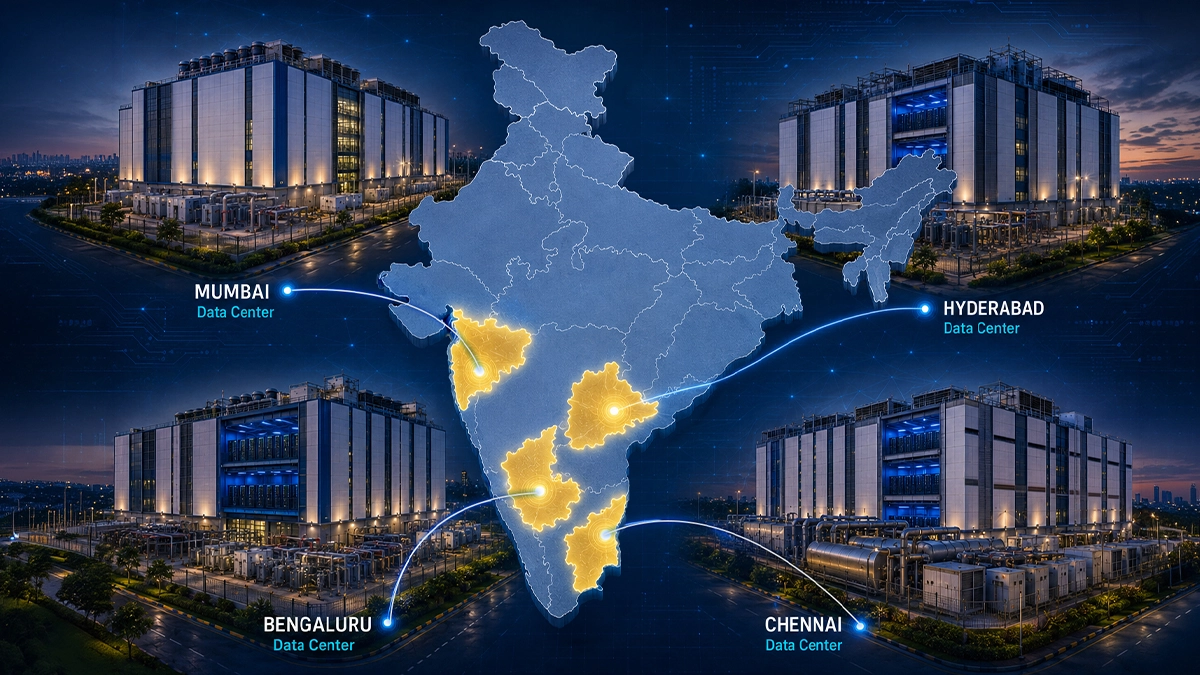
India’s data center market has moved firmly into hyperscale territory. Mumbai alone accounts for an estimated 40–50% of the country’s operational capacity, with Chennai, Hyderabad, and Bengaluru emerging as fast-growing secondary hubs. Policy support has accelerated the pace further — recent Union Budget provisions extended long-dated tax holidays for foreign companies providing cloud services from India-based data centers, alongside duty relief on battery energy storage systems, signalling that data infrastructure is now being treated as core national infrastructure rather than a niche real-estate category.
At the same time, AI-driven workloads are pushing rack densities well past 50–100 kW, and global data center electricity consumption is projected to nearly double by 2030. Operators are under pressure to add power-dense capacity quickly, safely, and repeatably — conditions under which factory-built, modular construction has a structural advantage over a fully site-built approach.
What Prefabricated Data Center Construction Actually Means
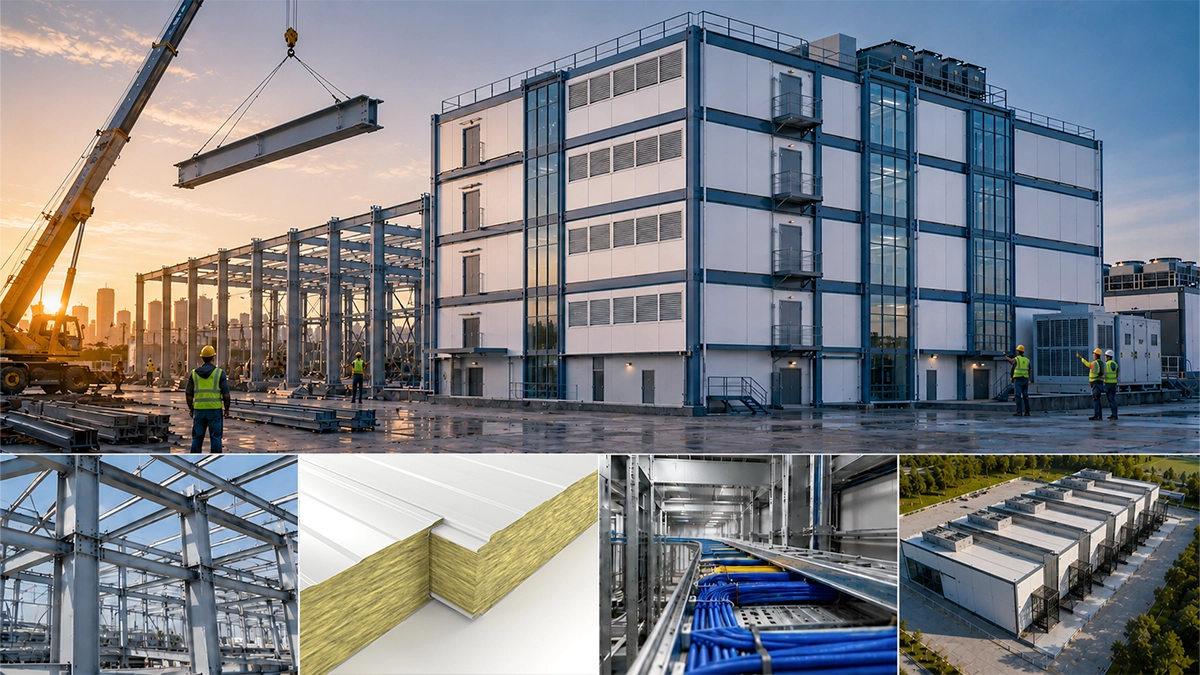
A prefabricated or modular data center isn’t a shipping container with servers in it — that’s one narrow application of the idea. In practice, it means engineering the structural shell, envelope, and often the power and cooling skids as factory-manufactured components:
- Structural framework: Pre-engineered steel structures or cold-formed steel framing form the main skeleton, offering a high strength-to-weight ratio and reliable load paths for heavy MEP equipment.
- Envelope and panels: Insulated sandwich panels (PUF, EPS, or Rockwool core) form thermally efficient roofs and walls, which matters directly for cooling load and PUE (Power Usage Effectiveness) targets.
- Utility integration: Electrical conduits, cable trays, and HVAC ducting can be planned into the design and even partly pre-installed at the factory stage, reducing on-site clashes and rework.
- Phased, modular capacity: Because each module is a repeatable building block, operators can commission capacity in stages as demand grows, instead of over-building on day one.
The components are manufactured in parallel with site and foundation work, then transported and assembled on a prepared pad — which is the core reason prefab data center construction can compress timelines so significantly.
Why Prefab Is Winning for Data Center Projects
1. Speed to revenue
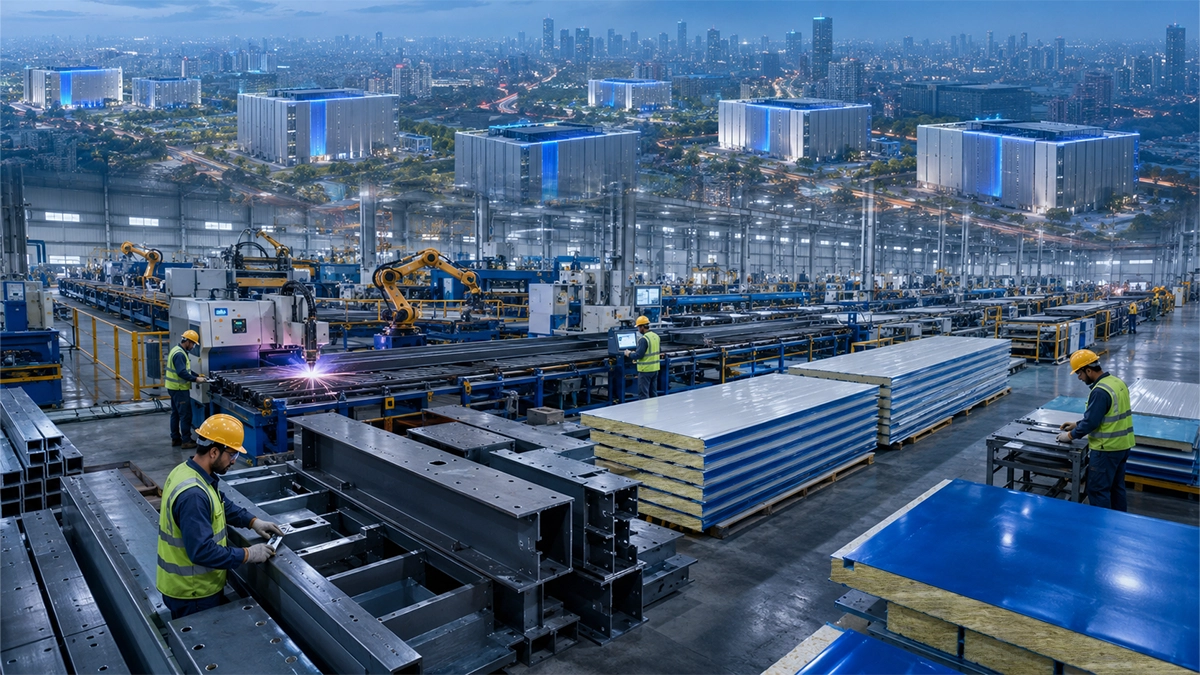
Every month a data center isn’t live is a month of lost hosting revenue or delayed internal capacity. Manufacturing structural and envelope components off-site, in parallel with site works, is the single biggest lever for compressing the shell-and-core phase of a project.
2. Factory-level quality control
Components built in a controlled manufacturing environment go through repeatable quality checks before they ever reach site, reducing the variability that comes with on-site fabrication in variable weather and labour conditions.
3. Cost predictability
Steel and panel quantities are engineered and priced up front, which limits exposure to on-site material wastage and schedule overruns — a meaningful advantage when capital is being deployed against tight commissioning deadlines.
4. Sustainability and PUE performance
Insulated envelope systems reduce the thermal load that cooling systems have to fight against, which feeds directly into better PUE outcomes and lower long-term operating costs — increasingly a procurement criterion for hyperscale tenants with net-zero commitments.
5. Built for India’s site constraints
Limited urban land, tropical heat loads, and grid connection timelines all favour a construction method where large parts of the building are ready before the site is even fully prepared.
Where This Applies: Data Center Formats Suited to Prefab
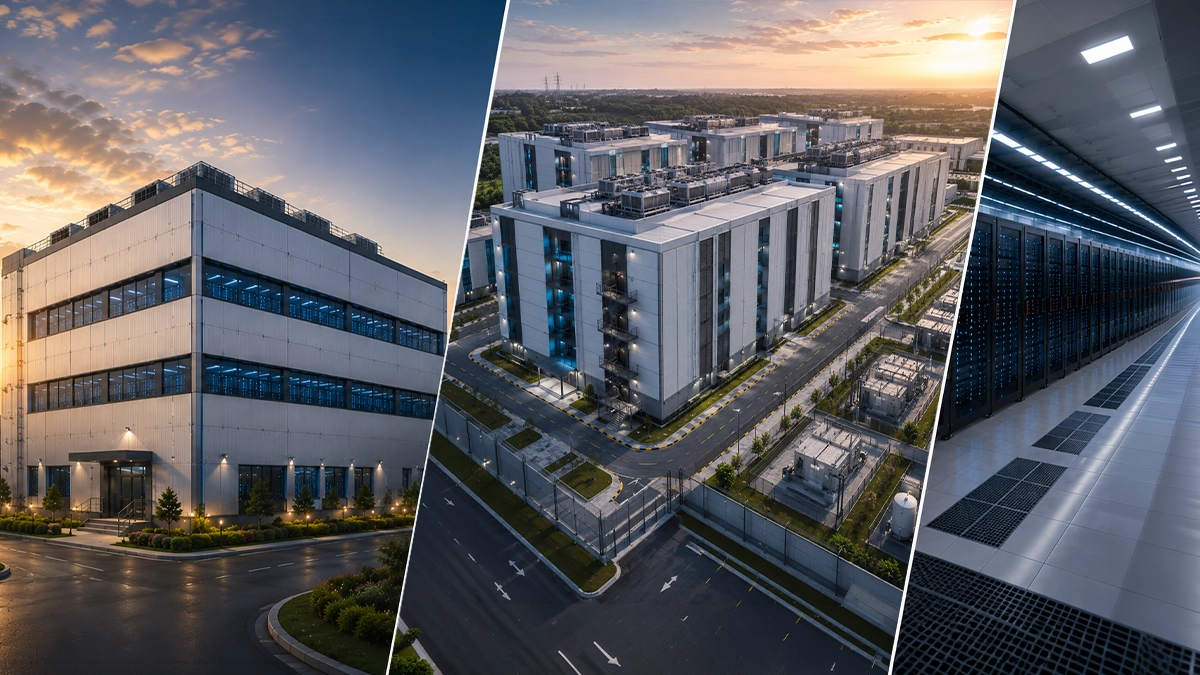
- Hyperscale and colocation campuses needing phased capacity expansion
- Edge and regional micro data centers supporting 5G and low-latency workloads
- Enterprise captive data centers for BFSI, IT/ITES, and government e-governance projects
- Disaster recovery and business continuity sites that need to be operational quickly
Engineering Considerations for Data Center Shells
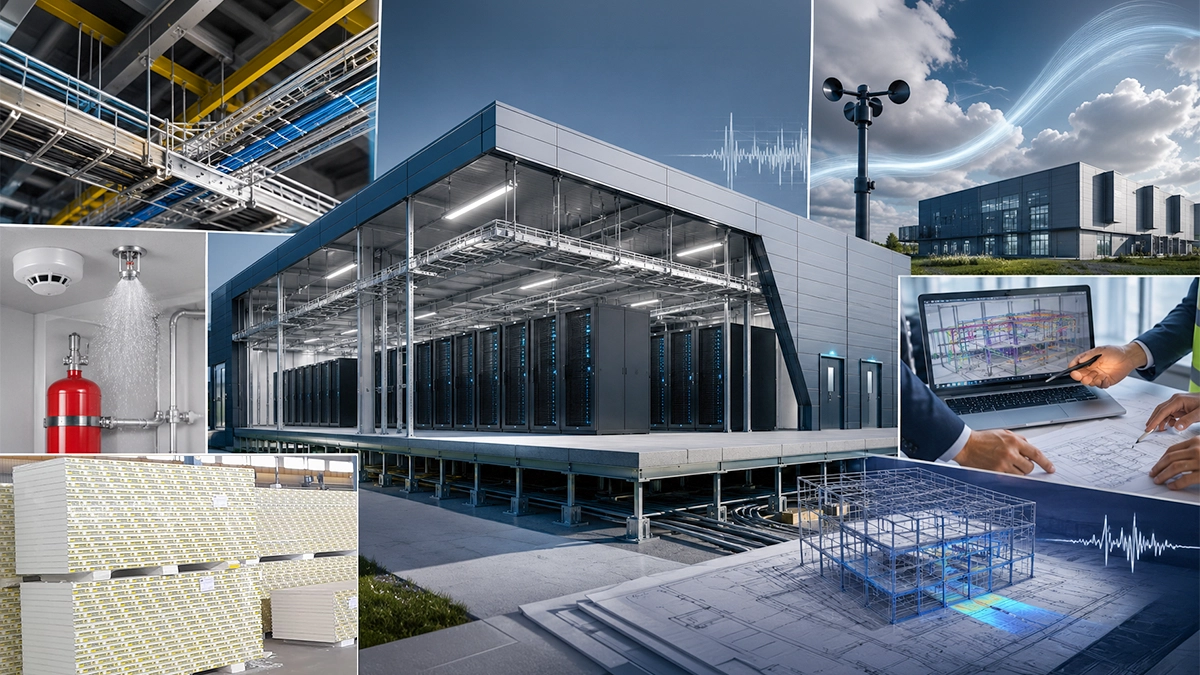
Data centers are not a standard warehouse shed with servers inside — they carry engineering requirements that need to be addressed at the design stage, not retrofitted later:
- Structural load paths for raised flooring, overhead cable trays, and dense rack rows
- Fire detection and suppression compliance aligned with National Building Code (NBC) and local fire authority requirements
- Envelope airtightness and insulation values that support the facility’s target PUE
- Early coordination between the structural design and the electrical/cooling systems integrator, so services are designed in rather than added on
- Seismic and wind load design appropriate to the site’s zone, given the uptime expectations placed on this class of building
Why EPACK Prefab for Data Center Construction
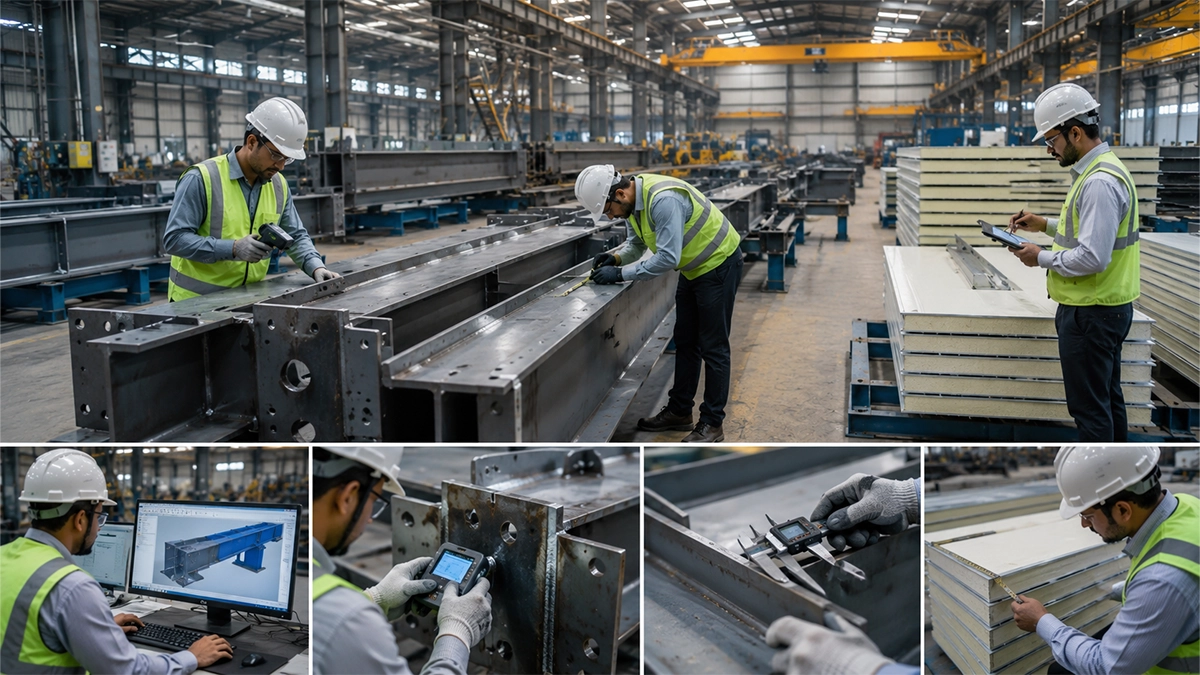
EPACK Prefab brings a manufacturing base built over 25+ years, with 7,400+ completed projects and a production capacity exceeding 1,47,122 MT of PEB structures and 13,10,000 sqm of insulated panels annually across its Greater Noida, Ghilot, and Mambattu plants. That scale is exactly what data center shell-and-core projects demand: repeatable, factory-tested components delivered to a fixed schedule.
In August 2026, the company formalised its move into this space with the launch of EPACK Data Center Solutions Private Limited, a wholly owned subsidiary backed by an initial investment of up to Rs. 75 crore. The intent is straightforward — to position EPACK as a strategic construction partner for data center operators and developers, applying the same PEB and sandwich panel manufacturing discipline that has already been proven across industrial, warehousing, and institutional projects. Learn more about EPACK’s PEB manufacturing capabilities
Planning a Data Center Project?
Whether you’re scoping a hyperscale campus, an edge facility, or a captive enterprise data center, getting the shell-and-core strategy right early can materially change your commissioning timeline. Contact EPACK Prefab’s project team to discuss site requirements, capacity planning, and a construction timeline built around your go-live date.