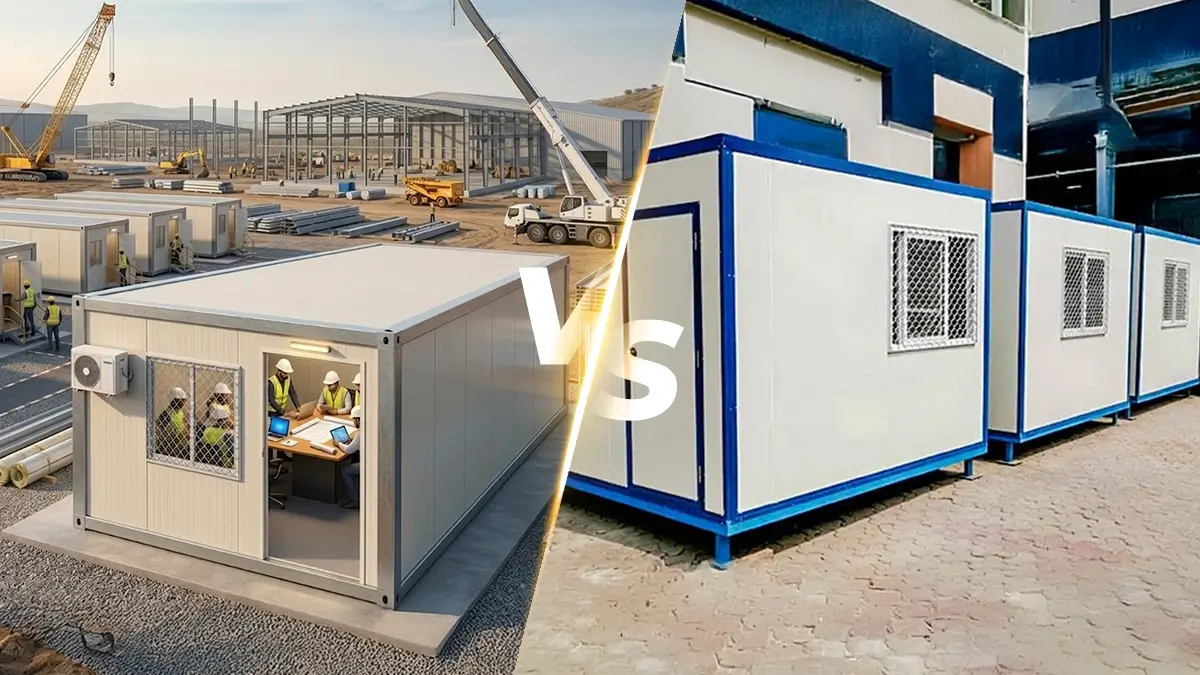
When a project needs a site office, staff accommodation, security cabin or control room, the right modular solution depends on more than purchase price. Transport planning, installation speed, insulation, reuse, site conditions and the required layout all affect the final decision.
This comparison explains where Z-Type modular cabins can offer an advantage and where a conventional or liftable porta cabin may still be the better fit.
For clarity, “traditional porta cabin” in this article refers to conventional fully fabricated or liftable portable cabin formats. Specifications vary by manufacturer and project.
At a Glance: Z-Type Cabin vs Traditional Porta Cabin
| Decision factor | Z-Type Modular Cabin | Traditional or Liftable Porta Cabin |
| Transport format | Foldable design for compact transport | Often transported at full height or supplied as components for assembly |
| Installation | Designed for rapid unfolding and commissioning | Installation time varies by design, site access and assembly requirements |
| Freight efficiency | Particularly useful where multiple units must be moved to site | Suitable where volume, route and handling requirements support the chosen format |
| Insulation | Available with insulated sandwich-panel configurations | Can also be specified with insulated panels |
| Relocation | Designed for repeated relocation, subject to proper handling and inspection | Many liftable and modular cabins are also relocatable |
| Best suited to | Fast-track and high-volume infrastructure deployment | Projects needing a conventional layout, phased assembly or a semi-permanent cabin solution |
The comparison should not be treated as a universal ranking. The better option is the one that matches the approved project scope, logistics plan and technical specification.
What Is a Z-Type Modular Cabin?
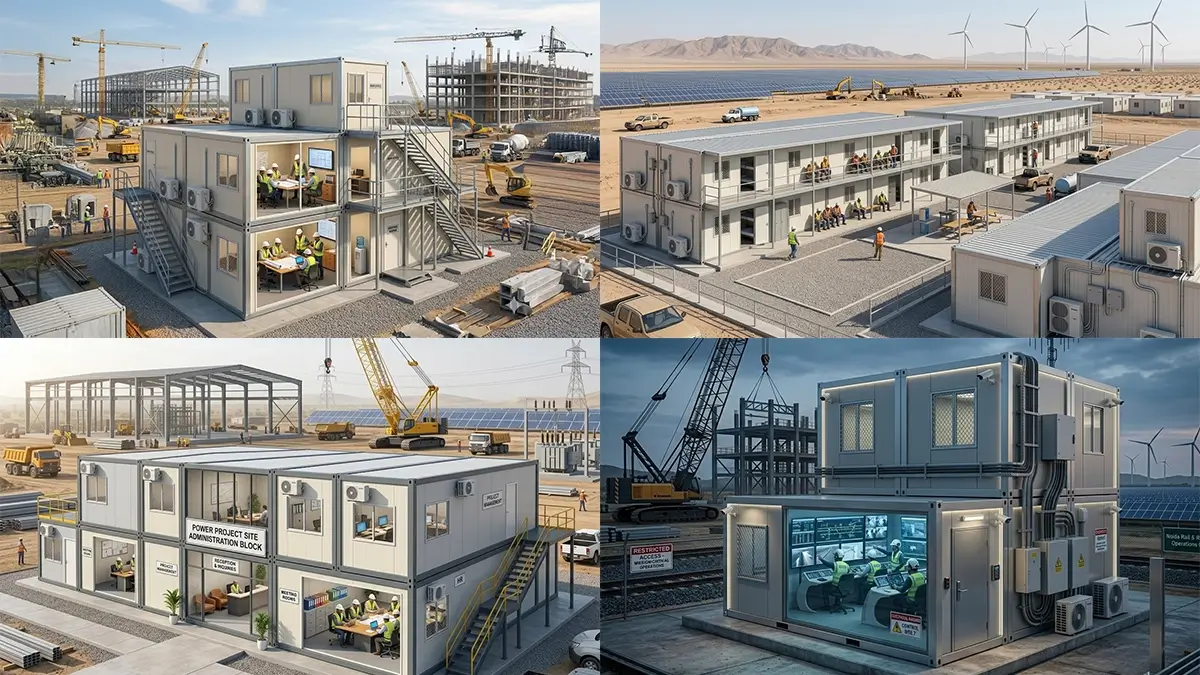
A Z-Type modular cabin is a foldable, factory-engineered portable cabin designed to reduce transport volume and enable rapid site deployment.
EPACK Prefab’s Z-Type cabin is supplied with a reinforced steel frame, integrated flooring, factory-fitted doors and windows, electrical provisions and 50 mm insulated sandwich wall and roof panels in PUF or PIR options. In collapsed transport mode, the indicative unit size is 5900 mm x 2400 mm x 510 mm.
Once positioned on a prepared, level surface, the cabin can be unfolded, locked and made ready for use in approximately 10 minutes, depending on site readiness and utility connection requirements.
This makes Z-Type cabins especially relevant for projects that need multiple units delivered and commissioned quickly.
What Are Traditional Porta Cabins?
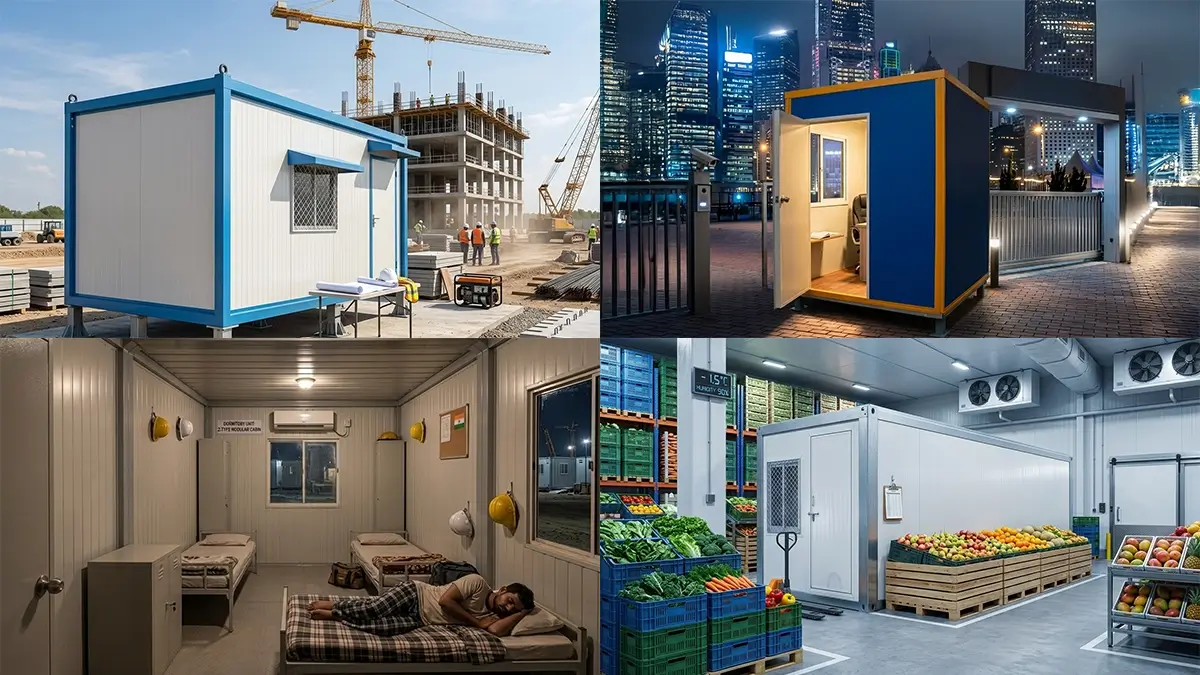
Porta cabins are prefabricated, portable structures used for site offices, accommodation, security posts, clinics, classrooms, storage and similar temporary or semi-permanent applications.
They are not a single construction standard. Depending on the manufacturer and model, a porta cabin may be:
- Fully fabricated and transported at its operational height
- Liftable and assembled from bolted structural components
- Designed for repeated relocation
- Supplied with insulated wall and roof panels
- Linked with other cabins to create a larger usable space
A conventional porta cabin should therefore not be described as inherently non-modular, non-insulated or unsuitable for relocation. The correct comparison is between the specific cabin configurations being considered.
The Key Z-Type Advantage: Transport Efficiency
The most distinctive advantage of a Z-Type cabin is its compact folded transport configuration.
A reduced transport height can help project teams move more units within an available truck or container volume. For a large or remote project, this may reduce freight movements, simplify deployment planning and lower site downtime.
Logistics savings are project-specific. They depend on the delivery route, vehicle type, payload limits, loading plan, number of units, handling equipment and destination conditions.
Z-Type modular cabins can improve freight efficiency and deployment speed for projects that require multiple units to be transported and commissioned quickly.
Installation Speed: Where Z-Type Can Be a Strong Fit
A Z-Type cabin is designed for a fold-and-lock installation process. This can reduce on-site assembly work when the base is prepared and lifting equipment is available.
Traditional liftable cabins can also be installed quickly, but they may require the separate positioning of the base frame, corner posts, roof frame and wall panels. This can be entirely suitable for projects where the installation programme is less compressed or where modular components are preferred.
Choose Z-Type cabins when rapid commissioning and high-volume deployment are central requirements. Choose a conventional or liftable cabin when its layout, delivery method and installation process better suit the project.
Structural Capacity and On-Site Stacking
Structural claims need careful wording. Do not claim that Z-Type cabins have a higher load capacity than traditional porta cabins unless the comparison is supported by approved structural calculations for both products.
Likewise, do not describe a Z-Type cabin as suitable for on-site vertical stacking or multi-level use unless the proposed configuration has been specifically engineered, certified and approved for the relevant loads. The folding mechanism supports compact transport; it should not be confused with an occupied multi-storey stacking capability.
For any cabin system, confirm:
- Floor live-load requirement
- Wind and seismic design criteria
- Roof load requirement
- Foundation or support arrangement
- Lifting and handling method
- Any proposed interconnection or multi-level configuration
Insulation and Indoor Comfort
Both Z-Type cabins and conventional porta cabins can be supplied with insulated sandwich panels. The correct comparison is not simply “insulated versus non-insulated.”
Thermal comfort and energy use depend on:
- Insulation core type and panel thickness
- Roof and wall configuration
- Joint sealing and air leakage
- Window area and glazing
- External climate and solar exposure
- Internal heat load and air-conditioning use
EPACK Prefab’s Z-Type cabins are available with 50 mm PUF/PIR insulated sandwich panels. The final panel selection should be based on the intended application, climate, temperature-control requirement and any fire-performance requirement.
If a project needs a defined thermal, acoustic or fire-performance level, request the relevant product data and test documentation before finalising the specification.
Lifecycle Value and Reuse
A modular cabin can create lifecycle value when it is maintained, inspected and relocated appropriately. This applies to Z-Type and liftable porta cabin formats alike.
Z-Type cabins may be particularly valuable where a business expects repeated bulk movement between projects, because their folded transport configuration can improve deployment efficiency. Traditional or liftable porta cabins may be a practical choice for projects that need a familiar bolted system, a specific layout or a longer stay at one location.
Z-Type modular cabins can provide stronger lifecycle value for projects that benefit from compact transport, rapid deployment and repeated relocation.
Which Cabin Is Right for Your Project?
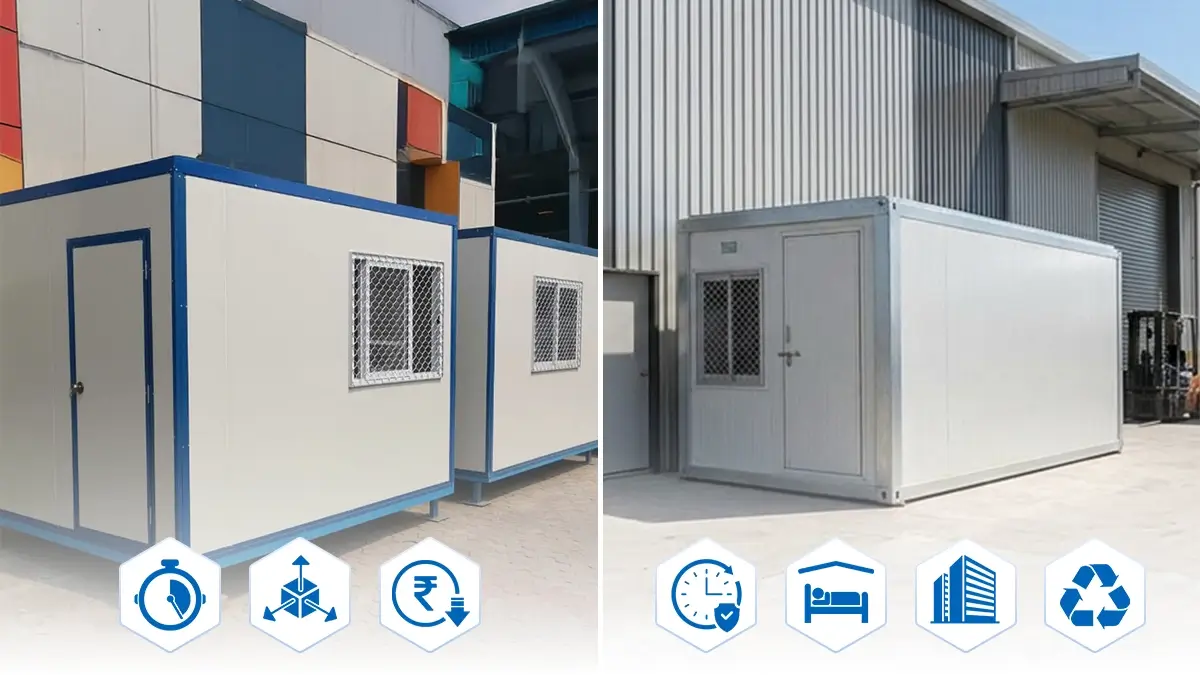
A Z-Type modular cabin may be the right choice when your project requires:
- Fast commissioning at a prepared site
- Multiple cabins delivered in a compressed schedule
- Better use of transport volume
- Repeat deployment across infrastructure or industrial locations
- A ready-to-use modular workspace with insulated panels
A traditional or liftable porta cabin may be the better choice when your project requires:
- A conventional component-based assembly format
- A customised layout or phased build-out
- A semi-permanent cabin solution at one location
- A configuration selected around site access, handling equipment and budget
Why Choose EPACK Prefab?
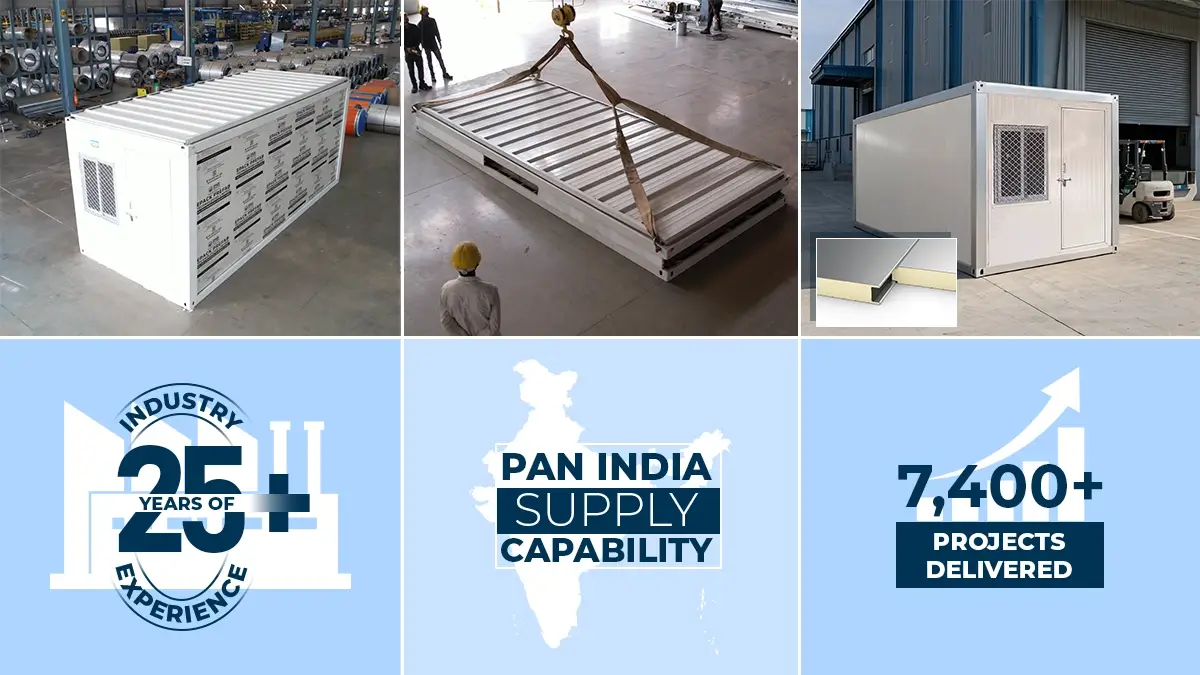
EPACK Prefab offers Z-Type modular cabins for fast deployment as well as porta and liftable cabin solutions for varied project needs. With in-house manufacturing capability, ISO-certified facilities and Pan-India delivery support, EPACK can help specify a solution around your application, layout, transport plan and installation conditions.
Explore EPACK Prefab’s Z-Type Modular Cabins and Porta Cabin Solutions to discuss the right configuration for your project.
Frequently Asked Questions
Are Z-Type modular cabins better than traditional porta cabins?
Not in every situation. Z-Type cabins are especially useful for fast, high-volume deployment and compact transport. Traditional or liftable porta cabins can be better suited to other layouts, installation methods and project durations.
Can Z-Type cabins be stacked on site?
Only where a specific multi-level configuration has been structurally engineered and approved. Compact stacking during transport must not be treated as proof of on-site stacking capability.
Are Z-Type modular cabins insulated?
EPACK Z-Type cabins are available with 50 mm PUF/PIR insulated sandwich panels. Final thermal performance depends on the selected specification and the complete building envelope.
How quickly can a Z-Type cabin be installed?
A Z-Type cabin can typically be made operational in approximately 10 minutes after positioning, subject to site readiness and required utility connections.
Conclusion
Z-Type modular cabins are not a universal replacement for traditional porta cabins. They are a strong choice for projects where compact transport, rapid deployment and repeated relocation are important. Conventional and liftable porta cabins remain practical options where their installation method, layout or on-site requirements better match the project.
The right solution should be selected against the approved technical specification, logistics plan and intended use rather than a generic claim of higher strength, ROI or lifespan.