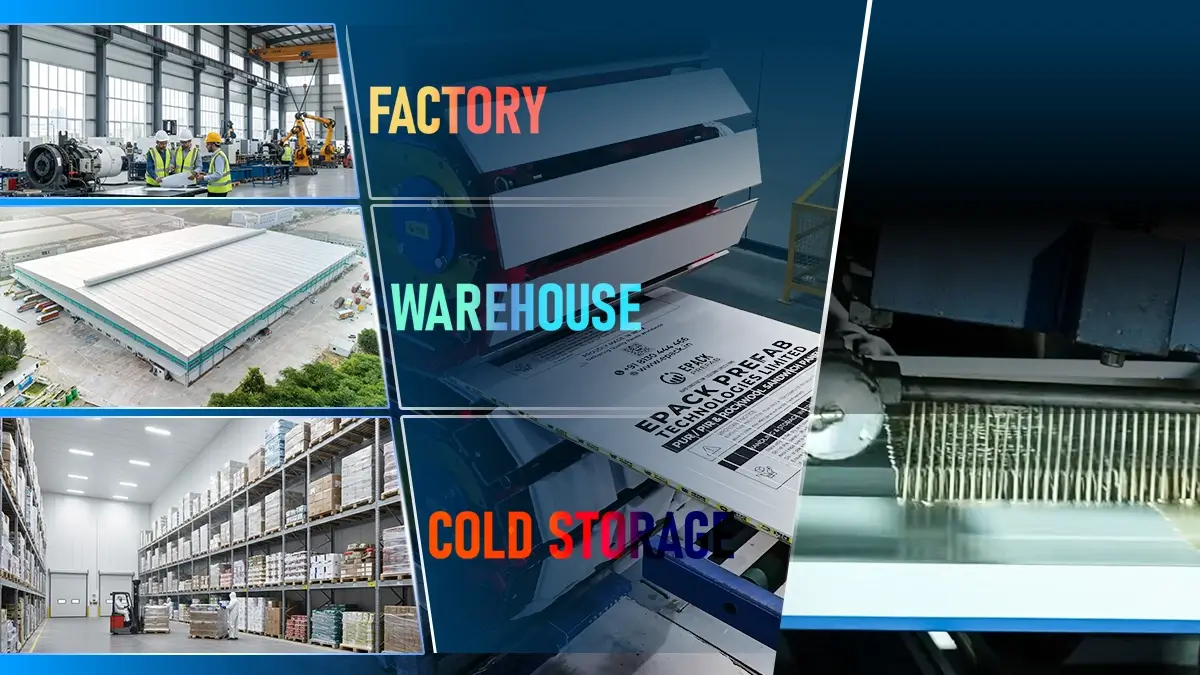
India’s industrial and infrastructure boom in 2026 has brought insulated sandwich panels into sharp focus. From cold storage and warehouses to factories, data centres, and public infrastructure, the demand for high-performance, energy-efficient panels has grown rapidly.
Meeting this demand consistently and at scale is only possible through Continuous Panel (CP) Line technology. CP lines have fundamentally changed how insulated panels are manufactured, setting new benchmarks for quality, speed, and reliability across India.
This blog explains what CP lines are, how they work, and why they are redefining insulated panel manufacturing in India.
The Growing Need for Advanced Panel Manufacturing

Modern construction projects demand insulated panels that deliver:
- Consistent thermal performance
- Reliable fire and acoustic properties
- Tight dimensional accuracy
- Fast delivery for large-scale projects
Traditional batch or manual panel manufacturing methods struggle to meet these expectations, especially when projects require thousands of square meters of panels with uniform performance.
This gap is where CP lines play a transformative role.
What Is a Continuous Panel (CP) Line?
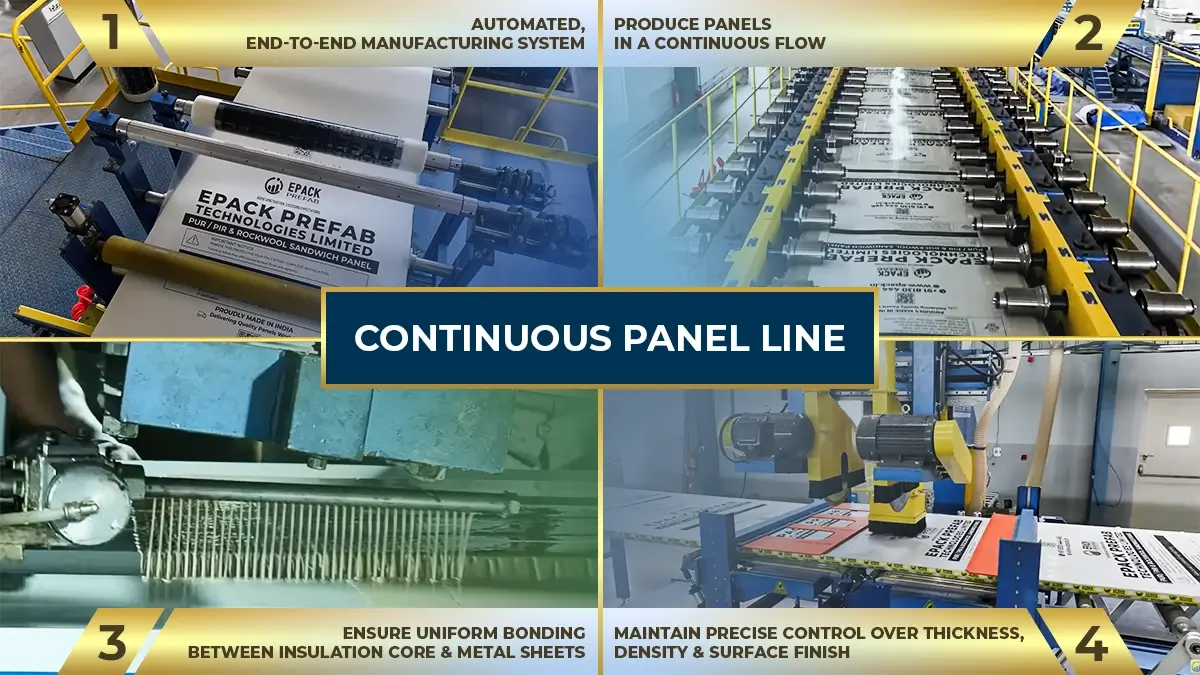
A Continuous Panel Line is an automated, end-to-end manufacturing system used to produce insulated sandwich panels in a continuous process.
Unlike conventional methods, CP lines:
- Produce panels in a continuous flow
- Ensure uniform bonding between insulation core and metal sheets
- Maintain precise control over thickness, density, and surface finish
CP lines are used to manufacture:
- PUF (Polyurethane Foam) panels
- Rockwool sandwich panels
- Glass Wool sandwich panels
- Cold storage and clean-room grade panels
How CP Lines Work: A Simplified Overview
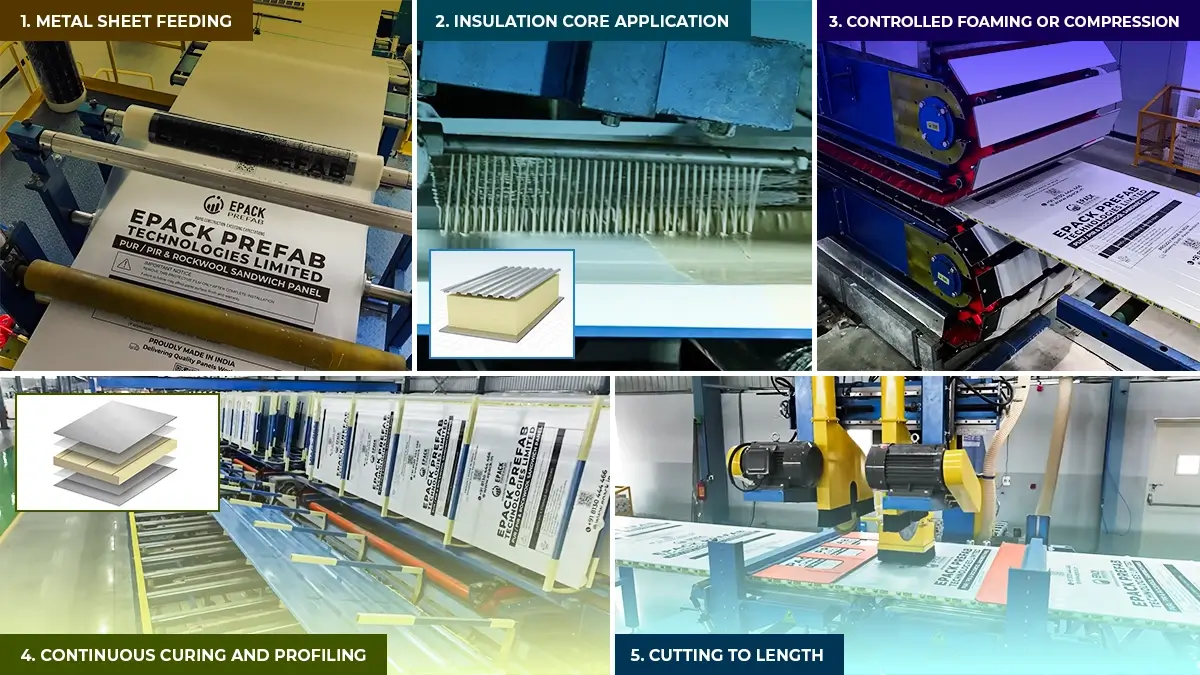
The CP line manufacturing process typically involves:
- Metal Sheet Feeding
Pre-coated steel sheets are fed continuously into the line. - Insulation Core Application
PUF, Rockwool, or Glass Wool insulation is applied uniformly between the sheets. - Controlled Foaming or Compression
The insulation core is evenly distributed and bonded under controlled conditions. - Continuous Curing and Profiling
Panels pass through curing zones to achieve optimal strength and insulation performance. - Cutting to Length
Panels are cut to precise lengths based on project requirements.
This fully automated process eliminates inconsistencies common in manual manufacturing.
Key Advantages of CP Line Manufacturing

1. Unmatched Product Consistency
CP lines ensure:
- Uniform panel thickness
- Consistent insulation density
- Strong, reliable bonding across the entire panel
This consistency is critical for applications like cold storage, clean environments, and energy-efficient buildings.
2. Superior Thermal & Acoustic Performance
Because CP lines maintain precise control over material distribution:
- Thermal insulation values remain consistent across batches
- Acoustic performance is more predictable
- Panels meet stringent project and regulatory requirements
This makes CP-manufactured panels suitable for high-performance infrastructure.
3. High-Speed Production for Large Projects
CP lines are designed for high-volume manufacturing, enabling:
- Faster production cycles
- On-time delivery for mega projects
- PAN India supply without quality compromise
This capability is essential for logistics parks, industrial clusters, and cold chain expansion.
4. Reduced Material Wastage
Automation minimizes:
- Insulation loss
- Sheet metal wastage
- Rejected panels due to defects
Lower wastage translates to better cost efficiency and sustainability.
5. Compliance with Modern Construction Standards
Panels manufactured on CP lines are better aligned with:
- Energy efficiency norms
- Fire safety standards (depending on core material)
- Green building requirements
This makes them future-ready for evolving regulations.
CP Lines and the Evolution of Insulated Panels in India
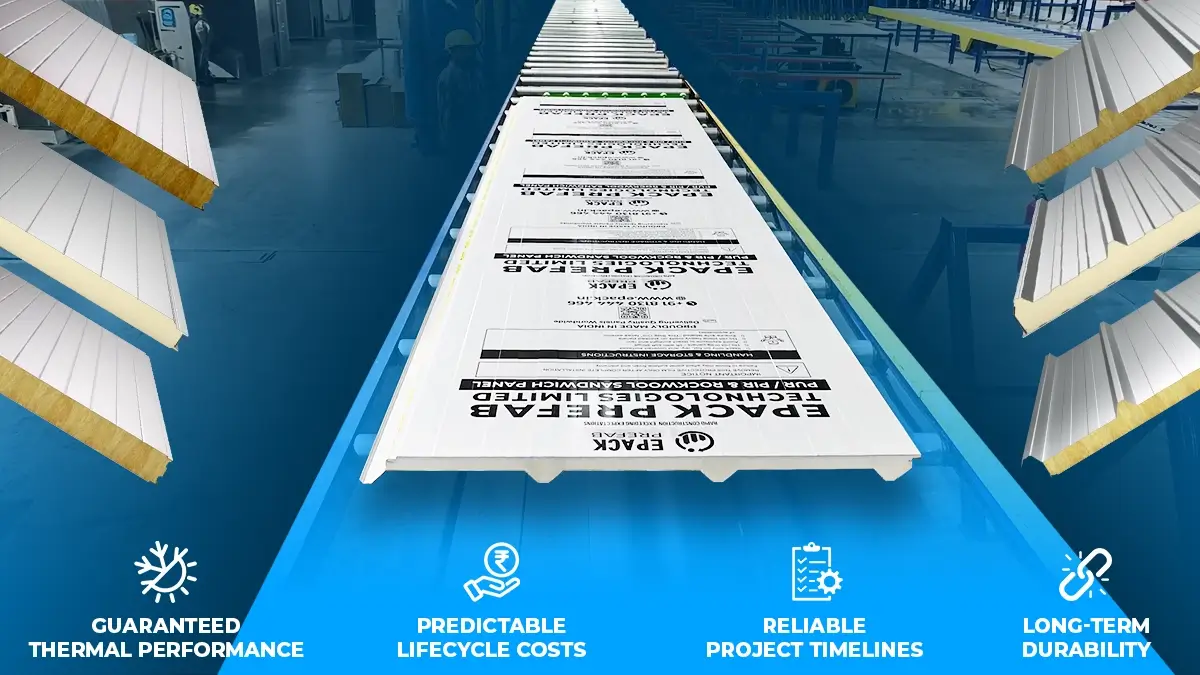
The adoption of CP line technology marks a shift from product-based manufacturing to solution-driven manufacturing.
In 2026, buyers are no longer just asking for panels—they are asking for:
- Guaranteed thermal performance
- Predictable lifecycle costs
- Reliable project timelines
- Long-term durability
CP lines make it possible to deliver panels that meet these expectations consistently.
Applications Benefiting Most from CP-Manufactured Panels

Insulated panels manufactured on CP lines are widely used in:
- Cold storage & cold rooms
- Warehouses and logistics hubs
- Factories and industrial sheds
- Data centres and clean environments
- Airports, metro stations, and public infrastructure
- Renewable energy and utility buildings
For such projects, performance consistency is as important as speed.
How EPACK Prefab Is Leading with CP Line Technology
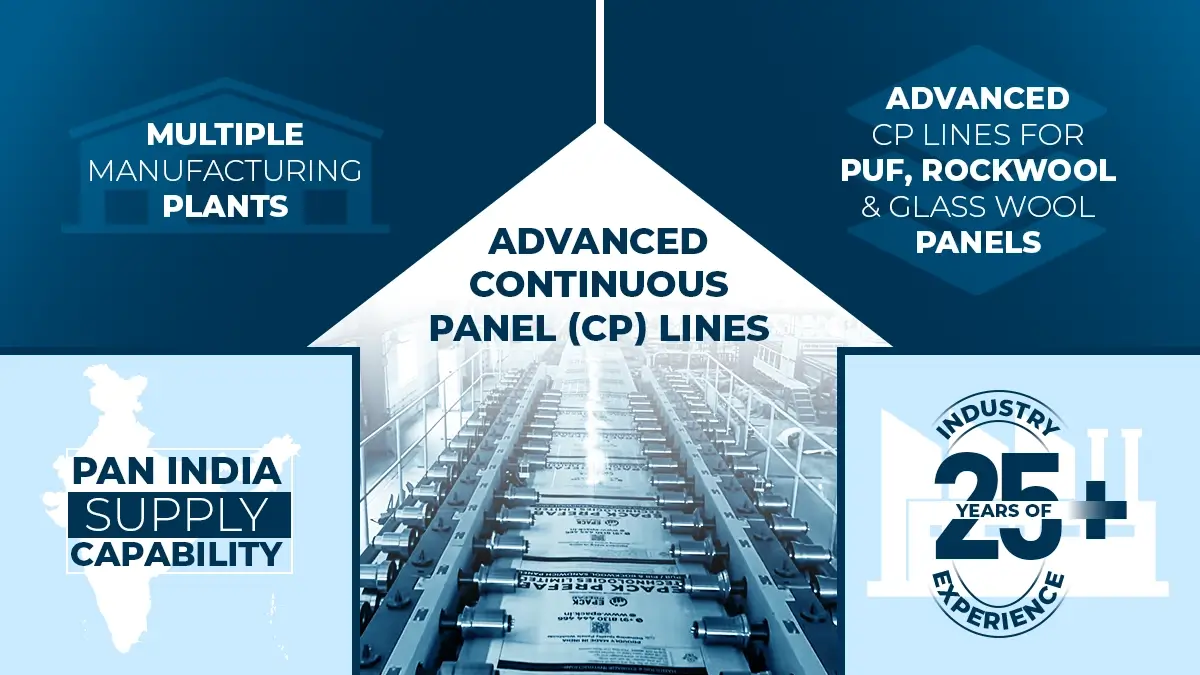
EPACK Prefab has invested significantly in advanced Continuous Panel (CP) lines to meet India’s growing demand for high-quality insulated sandwich panels.
With:
- Multiple manufacturing plants
- Advanced CP lines for PUF, Rockwool, and Glass Wool panels
- PAN India supply capability
- 25+ years of industry experience
EPACK Prefab delivers panels that meet the highest standards of performance, reliability, and scalability.
Why CP Lines Matter for Buyers in 2026

For project owners, developers, and EPC contractors, CP-manufactured panels offer:
- Confidence in product quality
- Reduced risk of performance variation
- Faster project execution
- Better long-term operational efficiency
In large-scale infrastructure and industrial projects, these advantages directly impact project success.
Conclusion
Continuous Panel (CP) lines are redefining insulated panel manufacturing in India by setting new benchmarks in quality, consistency, and speed. As infrastructure projects grow in size and complexity, CP line technology has become essential—not optional.
In 2026 and beyond, insulated panels manufactured on advanced CP lines will form the backbone of energy-efficient, safe, and future-ready buildings across India.
For CP line-manufactured insulated panels or project-specific solutions, reach out at enquiry@epack.in or call +918130444466.