
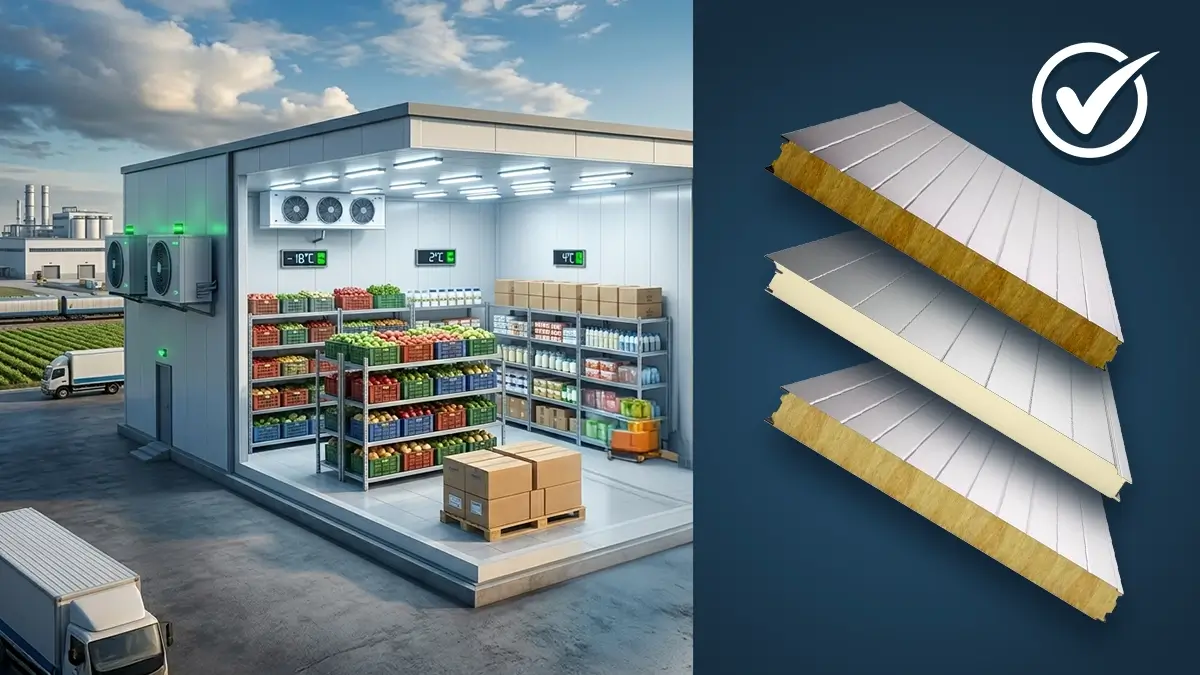
How to Choose the Right Insulated Panels for Maximum Efficiency & Performance
India’s cold chain infrastructure is undergoing its most significant expansion in a decade. Driven by surging demand in food processing, pharmaceuticals, agriculture exports, and organized retail, the country’s cold storage capacity is projected to grow substantially through 2026 and beyond. As energy costs rise and regulatory standards tighten, one decision increasingly determines the long-term success of any cold storage project: the choice of insulated panels.
The right panel selection directly affects energy consumption, temperature consistency, structural integrity, and total operating cost over the life of the facility. The wrong choice, however, leads to compressor overloads, product spoilage, moisture-related failures, and expensive retrofits. This guide breaks down every factor industrial buyers, facility developers, and project managers need to evaluate before specifying cold storage panels in 2026.
Explore EPACK’s Cold Storage Solutions
Why Panel Selection Matters in Cold Storage
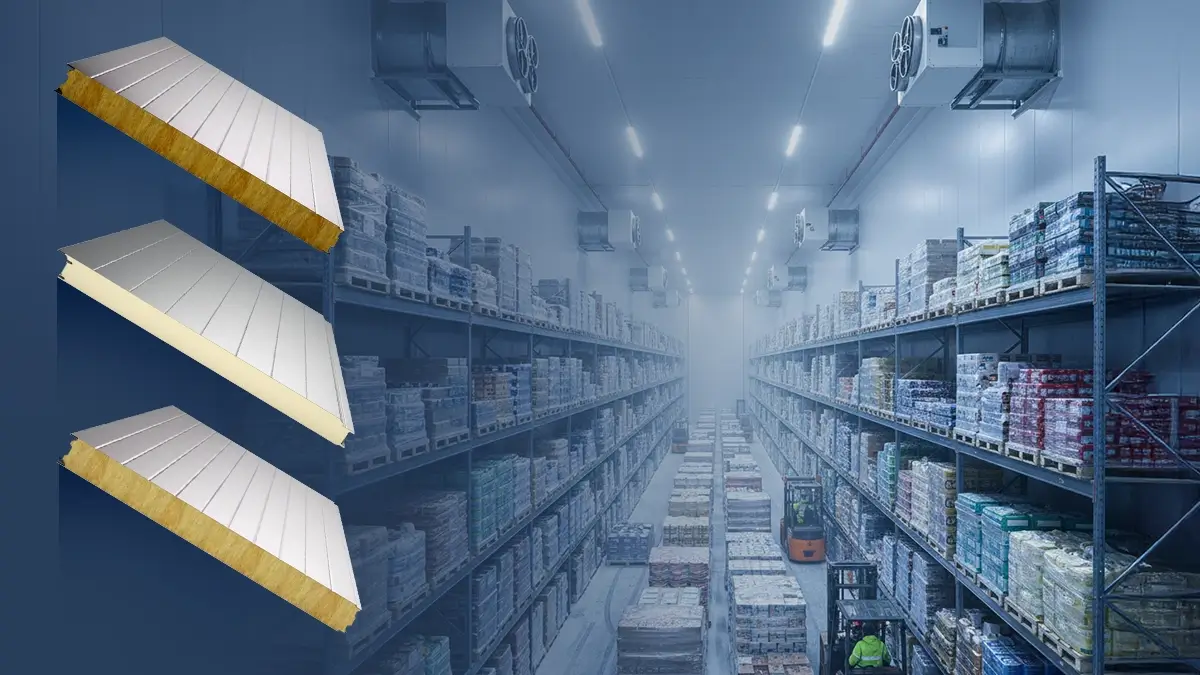
Cold storage facilities operate continuously — often 24 hours a day, 365 days a year — to maintain precise temperature conditions. Unlike conventional warehouses, cold rooms work against thermal gradients: the outside environment constantly pushes heat inward, and every inefficiency in the building envelope means the refrigeration system must work harder to compensate.
Poor panel selection leads to a cascade of operational problems:
- Continuous compressor overloading, shortening equipment life
- Energy loss through thermal bridging and inadequate insulation
- Condensation issues causing corrosion, mould, and hygiene failures
- Structural degradation due to thermal cycling and moisture ingress
- Product spoilage from temperature fluctuations during peak loads
This is why panel selection is not merely a construction procurement decision — it is a long-term operational investment that shapes energy bills, maintenance costs, and product safety for the entire facility lifespan.
6 Key Factors to Consider When Selecting Cold Storage Panels
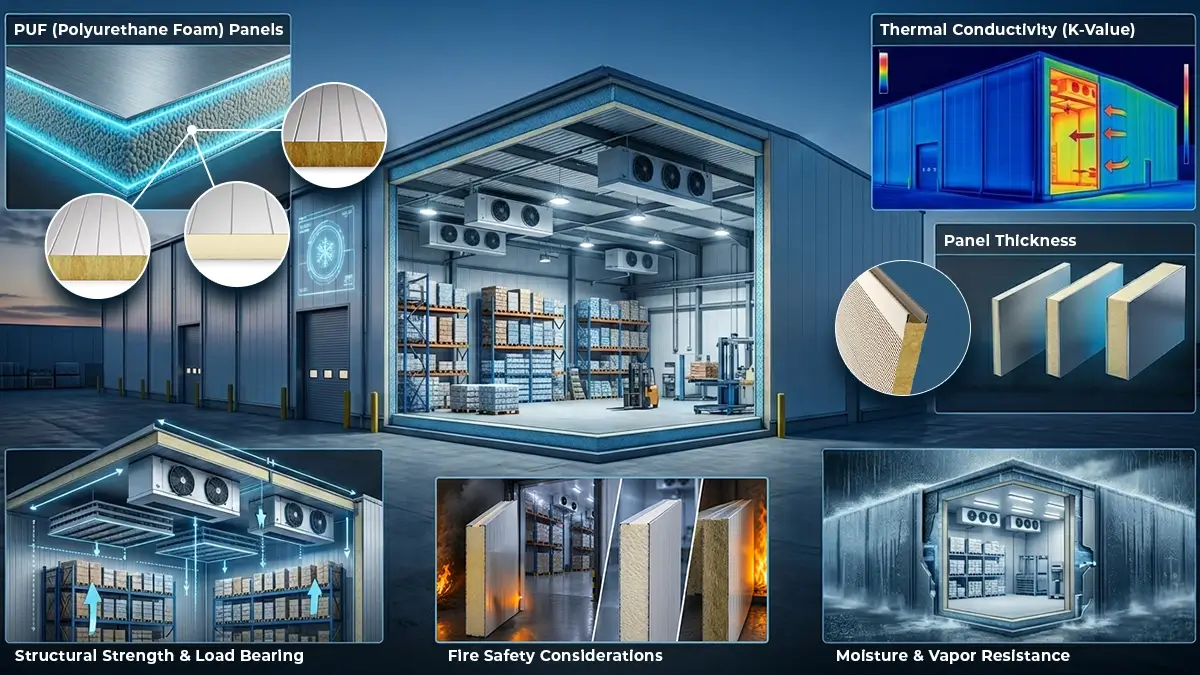
1. Insulation Core Type
The insulation core is the most performance-critical component of any cold storage panel. The three principal core materials used in India’s industrial cold storage market are:
PUF (Polyurethane Foam) Panels
PUF panels are the industry standard for cold storage applications. They offer the lowest thermal conductivity values available in mass-produced sandwich panels, combined with excellent moisture resistance and lightweight structural properties. PUF panels are ideal for cold rooms, temperature-controlled warehouses, pharmaceutical storage, and frozen food facilities.
Rockwool Panels
Rockwool (mineral wool) panels deliver superior fire resistance, making them the preferred choice for fire-classified zones and applications where regulatory compliance demands non-combustible materials. However, they perform at a lower insulation efficiency compared to PUF and are significantly heavier.
Glass Wool Panels
Glass wool panels are primarily used for acoustic insulation and HVAC duct applications. While they offer reasonable thermal performance, they are not the first choice for deep-freeze or cold storage environments due to their limited moisture resistance.
For the vast majority of cold storage projects in 2026, PUF insulated panels remain the technically superior and cost-effective choice.
2. Thermal Conductivity (K-Value)
Thermal conductivity — the K-value — measures how effectively a material transfers heat. In insulation, lower is always better. When evaluating panels, specify and verify:
- K-value of the insulation core (PUF typically achieves 0.022–0.025 W/mK)
- Uniform density throughout the panel — inconsistent density creates thermal weak spots
- Manufacturing process: panels produced on Continuous Panel (CP) lines achieve superior K-value consistency compared to batch-processed alternatives
Always request third-party test certificates confirming K-value data. Manufacturers using advanced CP line technology are better positioned to guarantee consistent thermal performance across large panel quantities.
3. Panel Thickness by Temperature Range
Panel thickness is not a one-size-fits-all specification. It must be engineered to the operating temperature range, external climate conditions, and the thermal mass of stored products. Undersizing thickness is one of the most common and costly mistakes in cold storage construction.
| Storage Temperature Range | Recommended PUF Thickness | Typical Application |
| +2°C to +8°C (Chilled) | 60mm – 80mm | Dairy, Fresh Produce, Beverages |
| -5°C to -10°C (Deep Chill) | 80mm – 100mm | Seafood, Processed Foods |
| -18°C to -25°C (Deep Freeze) | 100mm – 120mm | Frozen Foods, Ice Cream |
| -25°C to -35°C (Ultra-Low) | 120mm – 150mm | Pharmaceutical, Biotech |
Note: Thickness requirements also vary based on local climate zones. Facilities in hot and humid regions — coastal India, for instance — typically require one thickness grade higher than the baseline above.
4. Moisture & Vapour Resistance
Cold storage environments generate significant humidity differentials between the cold interior and the warm exterior. Without effective vapour barriers, moisture migrates through panel joints and the insulation core, eventually causing corrosion of metal facings, mould growth, and insulation degradation.
Key attributes to verify:
- Closed-cell foam structure (PUF is inherently closed-cell, resisting moisture absorption)
- Quality of joint sealing systems — cam-lock joints or tongue-and-groove profiles with proper gaskets
- Metal facing quality and thickness: minimum 0.5mm pre-painted galvalume or galvanized steel for cold storage
- Panel installation method: correctly installed panels with sealed perimeter joints are as important as the panel specification itself
5. Structural Strength & Load-Bearing Capacity
Cold storage panels — particularly ceiling and roof panels — must bear significant structural loads including equipment mounting, racking systems, foot traffic during maintenance, and the stresses of thermal expansion and contraction cycles. When specifying structural performance, look for:
- Strong adhesive bonding between the insulation core and metal facing sheets (delamination is a common failure mode in low-quality panels)
- Precision profiling of metal facings for interlocking rigidity
- Panels manufactured on CP lines, which apply controlled pressure and temperature throughout the bonding process, consistently outperform batch-manufactured panels in peel and shear strength tests
6. Fire Safety Considerations
Fire safety specifications for cold storage panels are increasingly governed by local building codes, insurance requirements, and end-use application standards. Key considerations:
- PUF panels with flame-retardant (FR) additives meet most standard industrial fire classifications
- For pharmaceutical storage, food processing, and public infrastructure, confirm compliance with NBC (National Building Code) fire safety norms
- Rockwool core panels are mandatory in certain occupancy classifications — verify with your structural consultant and fire safety officer before finalising specifications
PUF vs Rockwool vs Glass Wool: At-a-Glance Comparison
| Feature | PUF Panels | Rockwool Panels | Glass Wool Panels |
| Thermal Insulation | Excellent | Moderate | Moderate |
| Moisture Resistance | High | Moderate | Moderate |
| Fire Resistance | Good (FR grades available) | Excellent | Very Good |
| Structural Strength | High (CP line) | Moderate | Lower |
| Weight | Lightweight | Heavier | Moderate |
| Best Use Case | Cold Storage (primary) | Fire-Critical Zones | Acoustic/HVAC Areas |
| Cost Efficiency | Best overall value | Higher cost | Moderate |
For most cold storage applications in 2026, PUF insulated panels manufactured on advanced CP lines offer the best combination of thermal performance, moisture resistance, structural integrity, and cost efficiency.
Why Continuous Panel (CP) Manufacturing Matters
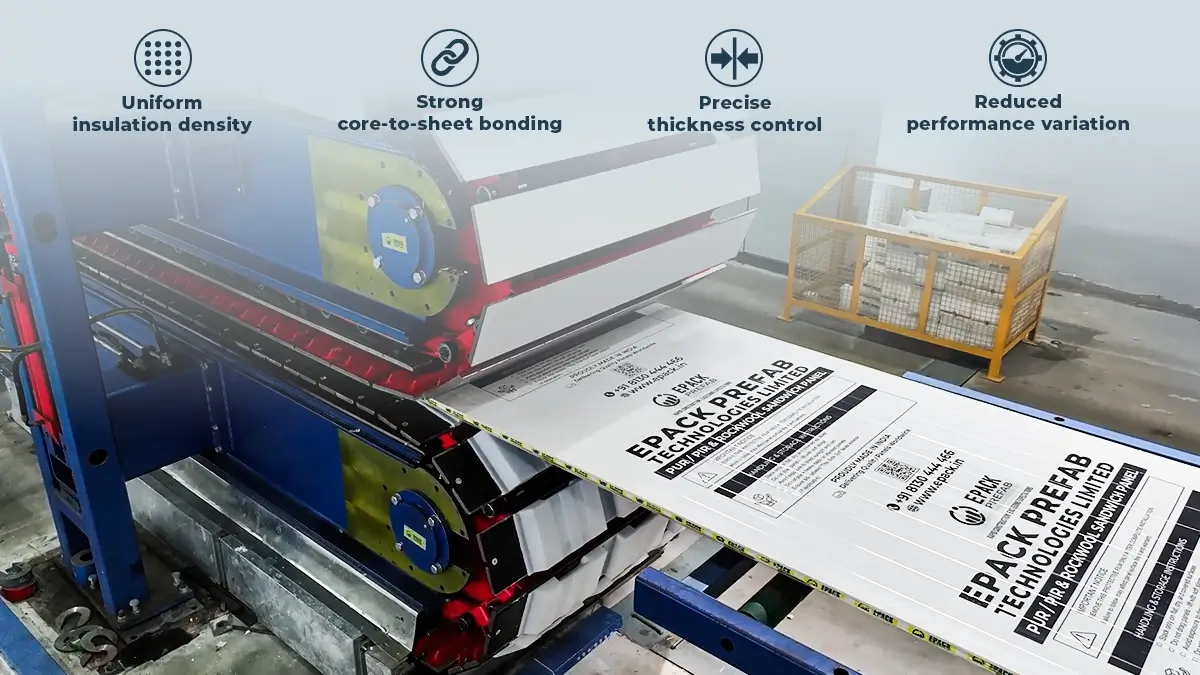
Not all PUF panels are created equal. The manufacturing process has a direct and measurable impact on panel performance in the field. In 2026, industrial buyers are increasingly distinguishing between panels produced on Continuous Panel (CP) lines versus conventional batch-manufactured panels.
CP line manufacturing offers four critical advantages:
- Continuous foaming under controlled pressure ensures consistent density throughout the panel — no voids, soft spots, or density variations that create thermal weak points.Uniform Insulation Density:
- The continuous process maintains optimal temperature and pressure during adhesive curing, resulting in bond strengths that significantly exceed batch-manufactured alternatives.Superior Core-to-Sheet Bonding:
- Digital control of panel thickness on CP lines ensures panels meet specification within tight tolerances — critical for modular cold storage assemblies.Precise Thickness Control:
- Large cold storage projects require hundreds or thousands of panels. CP line production delivers consistent performance across every panel in a batch — essential for facilities where a single weak panel can compromise the entire thermal envelope.Reduced Performance Variation:
For large-scale cold storage infrastructure, specifying CP line-manufactured panels is not a premium option — it is a quality baseline that directly protects operational efficiency and product integrity.
Learn About EPACK’s Manufacturing Facilities
Applications of Cold Storage Panels in 2026
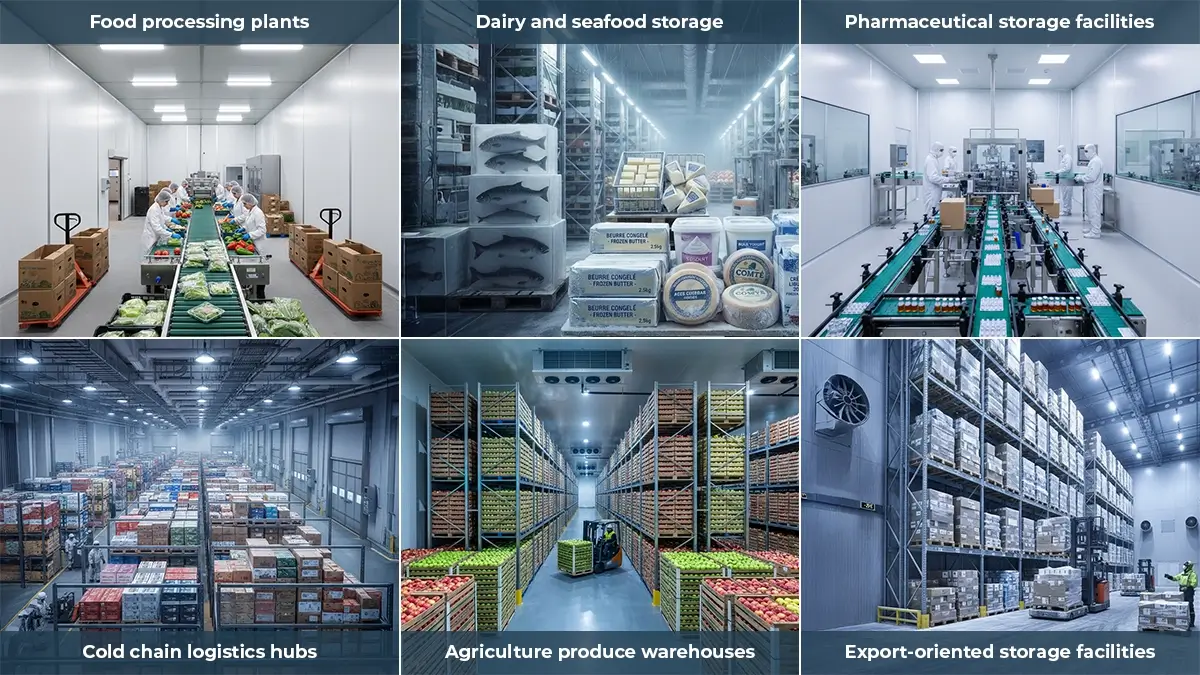
High-performance insulated panels are critical across a growing range of cold chain applications in India:
- Maintaining hygiene-compliant, temperature-stable environments for cooking, packaging, and blast-freezing operations.Food Processing Plants:
- Short shelf-life products demand flawless thermal envelopes with zero temperature deviation risk.Dairy & Seafood Storage:
- Strict GDP (Good Distribution Practice) compliance requires validated, validated temperature-controlled rooms — often demanding ultra-low temperature panels.Pharmaceutical Storage Facilities:
- Multi-temperature logistics parks need panels that enable fast, modular construction without compromising thermal performance.Cold Chain Logistics Hubs:
- Extending post-harvest shelf life of fruits and vegetables through cost-effective chilled storage.Agriculture Produce Warehouses:
- Meeting international regulatory standards for perishable exports, including FSSAI, APEDA, and foreign buyer specifications.Export-Oriented Storage Facilities:
Energy efficiency and long-term durability are now non-negotiable across all these applications. Rising electricity tariffs make every percentage point of insulation efficiency directly measurable in operating cost.
Common Mistakes to Avoid When Selecting Cold Storage Panels

- Choosing panels on price alone, without evaluating thermal conductivity, manufacturing quality, or moisture resistance. The cheapest panel almost always costs more in energy and maintenance over a 10-year operating horizon.
- Ignoring K-value certificates and relying on manufacturer claims without third-party test data.
- Not specifying manufacturing technology — batch-manufactured panels may appear identical to CP line panels on paper but perform significantly differently in service.
- Overlooking vapour sealing and joint quality. Even the best panel specification fails if installation and sealing are poorly executed.
- Selecting incorrect thickness for the operating temperature range. Always size one grade above the minimum calculation in hot or humid climates.
Proper technical evaluation at the specification stage typically saves 15–25% in lifecycle energy costs — a significant return for any cold storage project.
How EPACK Prefab Supports Cold Storage Projects
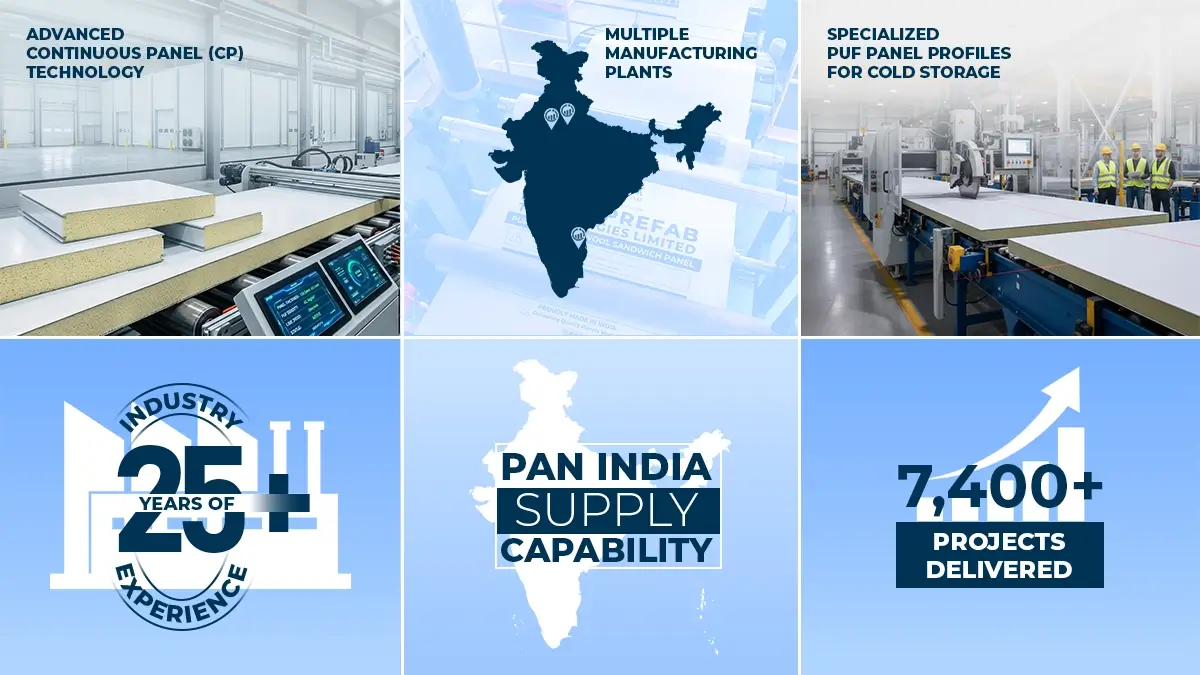
EPACK Prefab manufactures high-performance cold storage insulated panels using advanced Continuous Panel (CP) technology at three dedicated manufacturing plants: Greater Noida, Ghilot, and Mambattu. With an annual panel production capacity of 13,10,000 square meters, EPACK is equipped to supply large-scale cold chain infrastructure projects across India.
What EPACK Prefab brings to cold storage projects:
- Specialized PUF panel profiles engineered specifically for cold room and cold storage wall, ceiling, and floor applications
- CP line manufacturing ensuring uniform density, precise thickness, and consistent bonding quality across every panel
- Pan-India supply and project support from manufacturing facilities in Greater Noida, Ghilot, and Mambattu
- 25+ years of experience across 7,400+ projects — including food processing facilities, pharmaceutical stores, cold chain logistics parks, and export warehouses
- Technical consultation at specification stage to ensure the right panel grade, thickness, and joint system is selected for each project’s unique requirements
Contact EPACK Prefab for Cold Storage Panel Enquiries
Get Expert Guidance on Cold Storage Panels
EPACK Prefab’s technical team helps you select the right panel specifications for your temperature range, storage capacity, and budget. Our 25+ years of cold chain expertise and 7,400+ projects mean you get the right solution — first time.
+91-8130444466 | enquiry@epack.in | www.epack.in
Build Smarter. Build Faster. Build Future-Ready.
Frequently Asked Questions (FAQ)
Q: What is the best panel type for cold storage in India in 2026?
A: PUF (Polyurethane Foam) insulated panels manufactured on Continuous Panel (CP) lines are the best choice for the majority of cold storage applications. They offer the lowest thermal conductivity, the highest moisture resistance, and the most consistent quality when produced on CP line equipment — making them the preferred specification for food processing, pharma, dairy, and logistics cold storage projects.
Q: What panel thickness should I specify for a -18°C deep freeze facility?
A: For a standard -18°C to -25°C deep freeze application, a minimum panel thickness of 100mm to 120mm PUF is recommended. In hot or coastal climate zones in India, specify 120mm as a baseline. For ultra-low temperature applications below -25°C, 120mm to 150mm panels are required. Always confirm the final specification with a thermal calculation based on your specific location, product load, and door/opening frequency.
Q: What is the difference between CP line panels and batch-manufactured panels?
A: Continuous Panel (CP) line manufacturing uses automated, continuous foaming under controlled pressure and temperature to produce panels with uniform insulation density, consistent K-values, and superior core-to-sheet bonding. Batch manufacturing applies foam in discrete sections, which can result in density variations, bonding inconsistencies, and performance variation between panels. For large cold storage projects where consistency across hundreds of panels is critical, CP line panels are the professional standard.
Q: Do PUF panels comply with fire safety standards for cold storage in India?
A: Standard PUF panels meet general industrial fire safety classifications. For cold storage projects with specific fire resistance requirements — particularly pharmaceutical storage, food facilities, or projects under CGWA or local municipal fire regulations — specify PUF panels with flame-retardant (FR) grade additives. For the highest fire resistance requirements, Rockwool core panels should be evaluated. Always confirm panel fire ratings against your project’s NBC compliance requirements and your fire safety consultant’s recommendations.
Q: How do I get panel specifications and pricing for a cold storage project from EPACK Prefab?
A: Contact EPACK Prefab’s technical sales team directly at +91-8130444466 or email enquiry@epack.in with your project’s temperature range, floor area, location, and timeline. EPACK’s engineers will recommend the appropriate panel grade, thickness, and joint system, and provide a project-specific quotation. You can also visit www.epack.in for product information and to submit a project enquiry online.
Conclusion
In 2026, cold storage infrastructure is critical to India’s food security, pharmaceutical supply chain, and export competitiveness. As the cold chain sector grows, the performance gap between well-specified and poorly-specified facilities is becoming increasingly visible in energy costs, product losses, and facility lifespans.
Choosing the right insulated panels — the right core material, the right thickness for your temperature range, the right manufacturing quality, and the right joint system — is the single most impactful technical decision in cold storage construction. PUF insulated panels manufactured on advanced CP lines offer the industry’s best combination of thermal efficiency, moisture resistance, structural performance, and long-term reliability.
For cold storage projects across India, EPACK Prefab’s manufacturing capability, technical expertise, and pan-India supply network make us a trusted partner for getting panel specification right — from design stage to project completion.
Build Smarter. Build Faster. Build Future-Ready.