
Construction in India is changing fast. Project timelines are tighter, budgets face more scrutiny, and the demand for durable, scalable spaces is growing across sectors. In this environment, prefabricated steel buildings have emerged as a practical and intelligent choice for businesses, developers and infrastructure planners.
Whether you are setting up a warehouse, a factory, a commercial facility, or a large industrial complex, understanding what prefabricated steel construction offers can help you make a better decision.
What Are Prefabricated Steel Buildings?
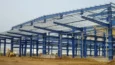
A prefabricated steel building is a structure where the primary components – columns, beams, roof systems, and wall panels are manufactured at a factory and then assembled at the project site. This approach is commonly used in pre-engineered buildings (PEB), modular structures, and light gauge steel framing (LGSF) systems.
Unlike conventional construction, which happens entirely on-site, prefabrication separates manufacturing from assembly. This makes the entire process more controlled, more consistent, and significantly faster.
Key Advantages of Prefabricated Steel Buildings
1. Faster Project Completion
One of the most valued benefits of prefabricated steel buildings is construction speed. Since fabrication happens simultaneously with site preparation, the overall project timeline reduces considerably. For businesses with operational deadlines, this faster turnaround directly translates into lower idle time and quicker returns.
2. Cost Efficiency Across the Project
Steel prefabrication reduces waste, shortens labour requirements on-site, and minimises material over ordering. The factory environment also allows for better quality control, which reduces costly rework. Additionally, the lighter weight of steel structures often lowers foundation costs.
3. Structural Strength and Durability
Steel is one of the strongest building materials available. Prefabricated steel structures are engineered to handle heavy loads, wind pressure, seismic activity, and thermal changes. With proper protective coatings, they also resist corrosion over long operational lifespans.
4. Design Flexibility and Customisation
Prefabricated steel buildings are not rigid, one-size-fits-all solutions. They support wide spans without internal columns, multi storey configurations, mezzanine floors, and custom layouts. From small factory sheds to large span industrial warehouses, the design possibilities are extensive.
5. Scalability and Expandability
Business needs evolve. Prefabricated steel structures can be extended or modified with relative ease compared to RCC buildings. Adding bays, expanding floor area, or reconfiguring internal spaces is achievable without dismantling the existing structure.
6. Sustainability Credentials
Steel is one of the most recyclable construction materials globally. Prefabrication also reduces on-site waste generation and construction-related carbon emissions. For organisations focused on green building goals, prefabricated steel buildings align well with sustainability targets.
Where Are Prefabricated Steel Buildings Used?
The versatility of prefabricated steel structures means they serve a wide range of sectors:
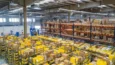
- Warehousing and logistics – large clear-span spaces for storage and distribution
- Industrial and manufacturing – factory buildings and production sheds with custom layouts
- Commercial spaces – showrooms, retail outlets, and office complexes
- Institutional projects – schools, healthcare centres, and community facilities
- Infrastructure – railway shelters, telecom enclosures, and border infrastructure
- Agricultural storage – grain storage, cold storage facilities, and processing units
This breadth of application makes prefabricated steel buildings one of the most versatile structural solutions in modern construction.
The Role of Insulated Panels in Prefabricated Steel Buildings
Structural steel alone does not create a fully functional building envelope. Insulated sandwich panels – PUF panels, EPS panels, rockwool panels and glass wool panels play a critical role in completing the building with thermal insulation, weather resistance, and acoustic control.
These panels integrate seamlessly with steel frameworks, reducing energy consumption inside the building and improving comfort for occupants. For cold storage units, clean rooms, and industrial enclosures, choosing the right panel type is as important as the structural design itself.
Why EPACK Prefab for Prefabricated Steel Buildings?
EPACK Prefab, established in 1999 and headquartered in Greater Noida, brings over two decades of experience in designing, fabricating, and installing prefabricated steel buildings across India. The company holds ISO 9001:2015 and ISO 14001:2015 certifications and offers end-to-end EPC solutions from concept and engineering to fabrication and on-site installation.
With in-house manufacturing capabilities, a strong PAN India project network, and engineering teams experienced in diverse project types, EPACK Prefab supports clients in the industrial, commercial, infrastructure and institutional sectors.
Final Thoughts
Prefabricated steel buildings represent a mature, proven approach to construction that delivers real advantages in speed, cost, strength and flexibility. As India’s infrastructure and industrial sectors continue to expand, the relevance of this construction method will only grow.
If you are planning a new facility or looking to expand an existing one, a prefabricated steel building deserves serious evaluation.
Ready to explore your options? Get in touch with the EPACK Prefab team today for a project consultation and free quote.
🌐 Website: www.epack.in
✉️ Email: enquiry@epack.in
📞 Phone: +91 81304 44466